Russia's Key Interest Rate Hike
Today I will shed light on the Russian economy, which I hope will also help understand the events of the last two weeks in our region.
Russia’s Key Interest Rate Hike
Over the past two months, the Central Bank of Russia has held three extraordinary meetings, during which it decided to raise the CBR key interest rate from 7.5% to 13%. This interest rate hike is significant for the Russian economy and is officially aimed at combating inflation. However, at present, inflation rates are comparable to those in major economies (excluding Turkey and Argentina, which face specific economic challenges).
Chart 1 CBR Key Interest Rate

Inflation Dynamics
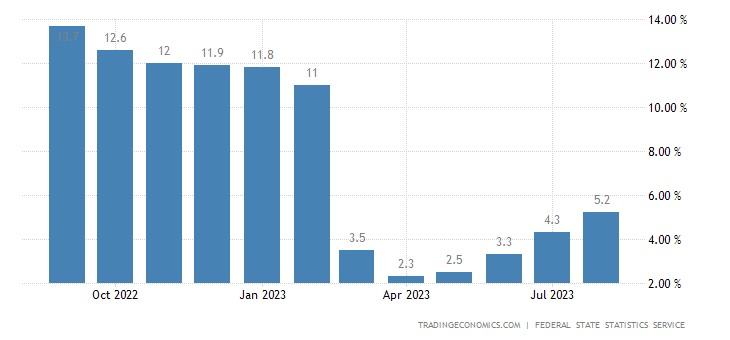
Inflation in Russia reached 18% in February 2022 after the invasion of Ukraine. A subsequent rate hike to 20% helped contain inflation initially. However, it raises some questions that Russia recorded an unprecedented decline in inflation over several months, dropping from 11% to 3.5% in one month. This also suggests that non-monetary forces have a greater impact on Russia’s inflation.
Chart 2 Russia’s Inflation Over the Last 12 Months
Fluctuations of the Russian Ruble
The Russian ruble has been continuously depreciating over the past year, and it is now trading at around 99 rubles per US dollar, compared to about 60 rubles per dollar in June 2022. The recent depreciation of the ruble has been halted by the key interest rate hike. The sharpest increase, by 3.5 percentage points (from 8.5% to 12%), was recorded at an extraordinary meeting held on August 15. On that day, the Russian ruble crossed the 100 rubles per dollar threshold for the first time since the start of the Russia-Ukraine war, after which the extraordinary meeting was convened. This measure temporarily prevented further ruble depreciation. Essentially, the interest rate hike is an attempt to prevent the ruble’s decline and strengthen it, rather than a measure to curb inflation. As the ruble continues to depreciate and again approaches the psychological threshold of 100 rubles per dollar, it can be expected that the Central Bank of Russia will again raise the key interest rate in the coming days.
Chart 3 US Dollar and Russian Ruble Exchange Rate
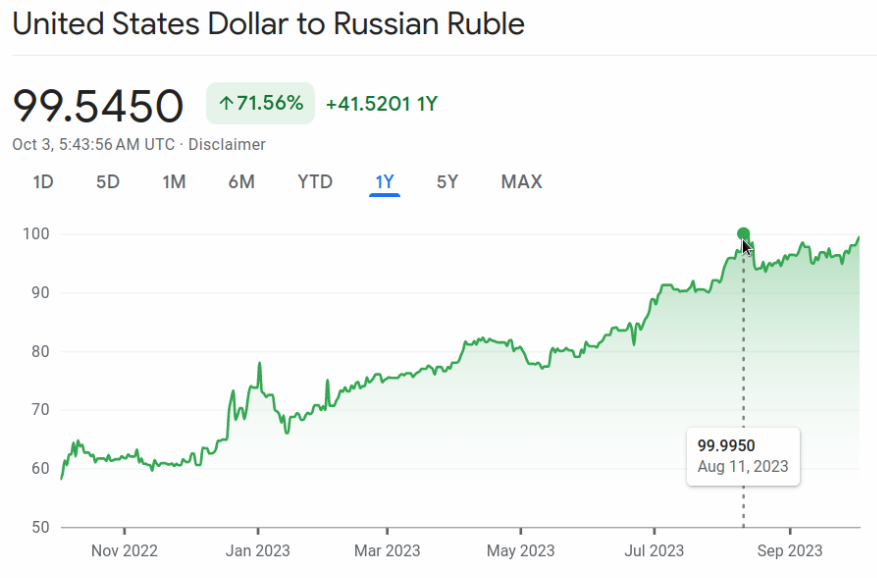
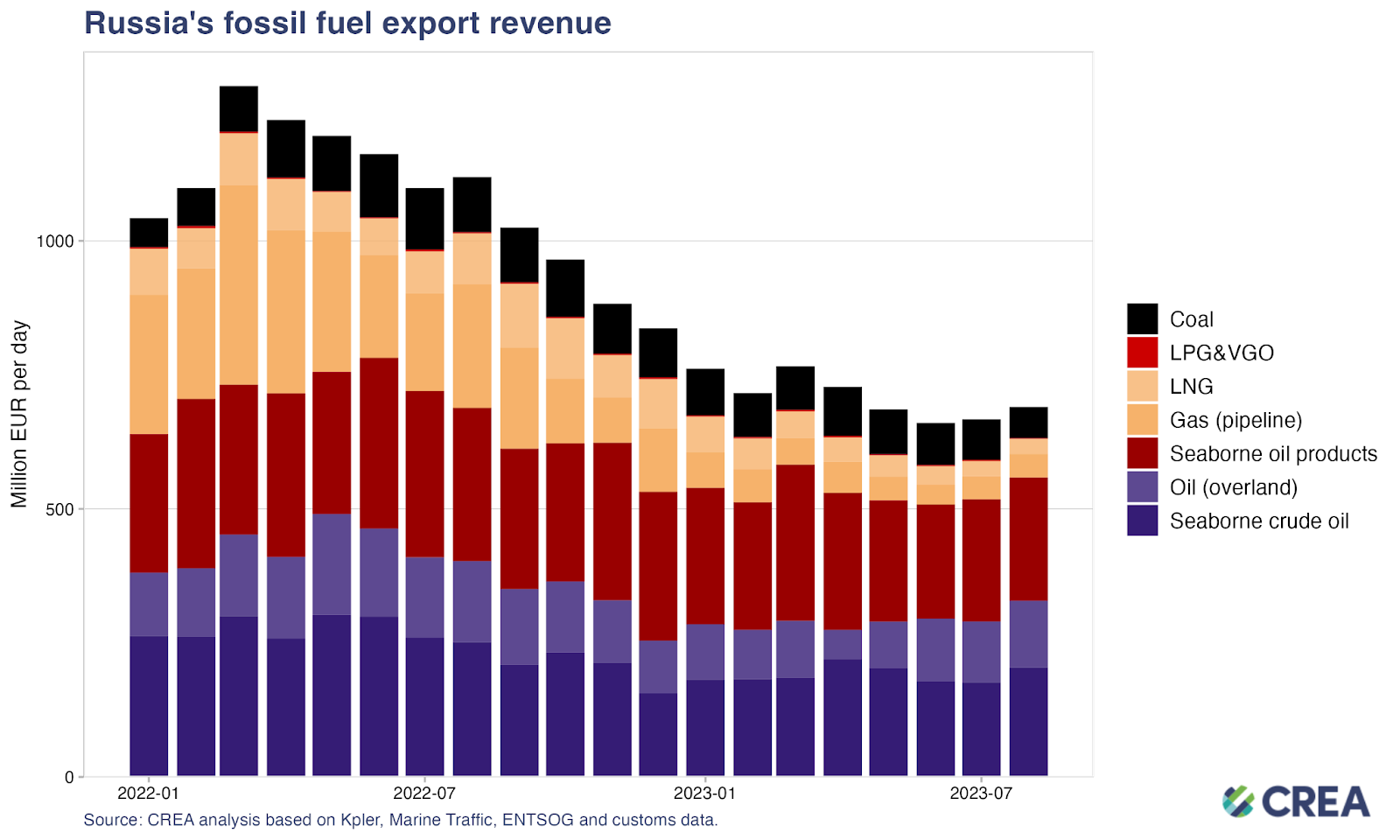
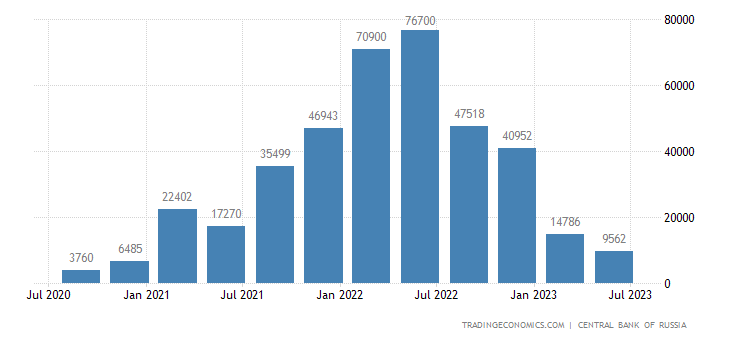
Chart 4 Russia’s Export Revenue from Oil Products and Natural Gas
Trade and Current Account
Russia’s trade balance has significantly deteriorated recently, and it is currently at its lowest level since the COVID-19 pandemic. This decline is contributed to by sanctions and reduced exports. This, in turn, puts pressure on Russia’s current account, which has been declining over the last 12 months. I should note that Russia has historically maintained its positive balance primarily through the export of oil products and natural gas, which has significantly decreased in recent months.
Chart 5 Russia’s Merchandise Trade Balance
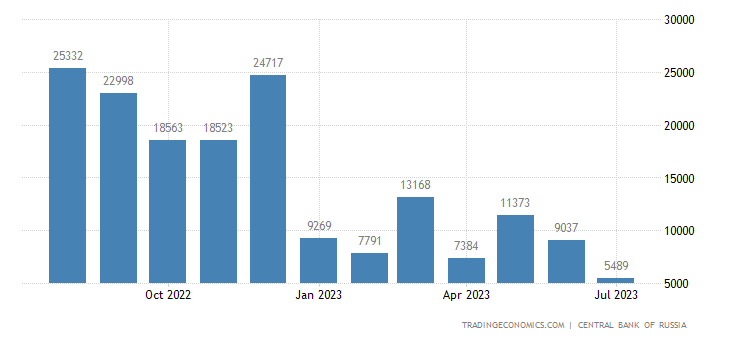
Chart 6 Russia’s Current Account Balance
Indefinite Suspension of Gasoline and Diesel Exports
As of September 21, the Russian Federation has imposed an indefinite ban on the export of oil products. This does not apply to EAEU countries, which include Armenia. This step raises some questions, as there is currently a deteriorating trade balance, and Russia needs to increase exports to ensure a positive current account balance. Oil products, including gasoline and diesel fuel, have higher added value compared to crude oil. It should be noted that this ban does not apply to crude oil, and the demand for crude oil is greater in China and India. The problem is that domestic gasoline prices in Russia have been continuously rising recently, and there is a clear goal to stabilize the domestic fuel market. Currently, it is harvest season in Russia, and there is not enough fuel for the grain harvest. This is also due to the ruble’s exchange rate depreciation. In fact, it is more profitable to export gasoline than to keep it in the domestic market, where it has a stable ruble-pegged price. Russia faces the threat of losing income from fuel exports, which significantly impacts the economy. This development poses a complex challenge for Russia, as it seeks to stabilize its domestic market while dealing with the reduced financial consequences of exports, affecting its economy and oil refining plants.
Conclusion
Over the past 18 months, Russia has been in conflict with Ukraine. A considerable number of sanctions are currently in effect against the Russian economy. This has significantly weakened the Russian economy. Russia faces a substantial challenge in economic growth and current account recovery.
The stronger the economy, the stronger the state. In recent months, the Russian economy has shown certain problems, which could also be one of the causes of instability in the region.