Energy problem: solar danger and summer records at the expense of Russian gas
On September 25, Russian gas supplies to Armenia are scheduled to resume after a ten-day scheduled maintenance of the North Caucasus gas pipeline [1]. Prior to that, on September 1, the Metsamor nuclear power plant was reconnected to the grid after a 153-day maintenance [2]. In fact, about a third of the country’s electricity production was unavailable during the summer months, but the power system remained stable and no outages were recorded. This analysis examines the sources of energy supply and their financial impact.
Five months without a nuclear power plant
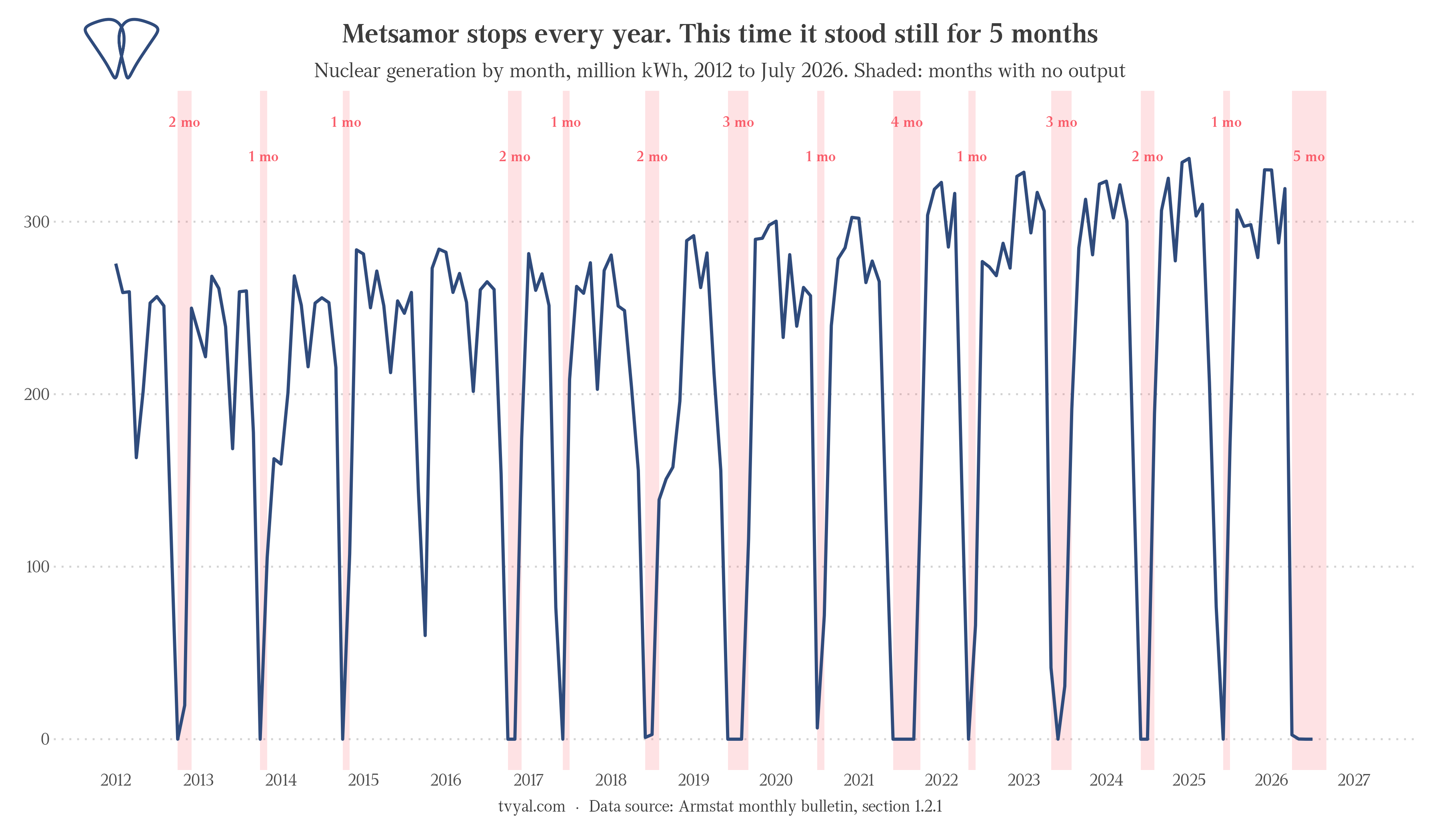
The Metsamor nuclear power plant is shut down every year. Due to the plant’s wear and tear, its operating life is extended by more than a decade. Every summer, it shuts down for one or two months to re-equip and serve the economy’s demand again. This year, the plant’s operations were shut down on April 1 as part of the second life extension program, which is expected to ensure its operation until 2036. It was restarted on September 1, five months later. It should be noted that since 2012, the shutdowns have mostly lasted one or two months, with the exception of 2021, when it lasted four months.
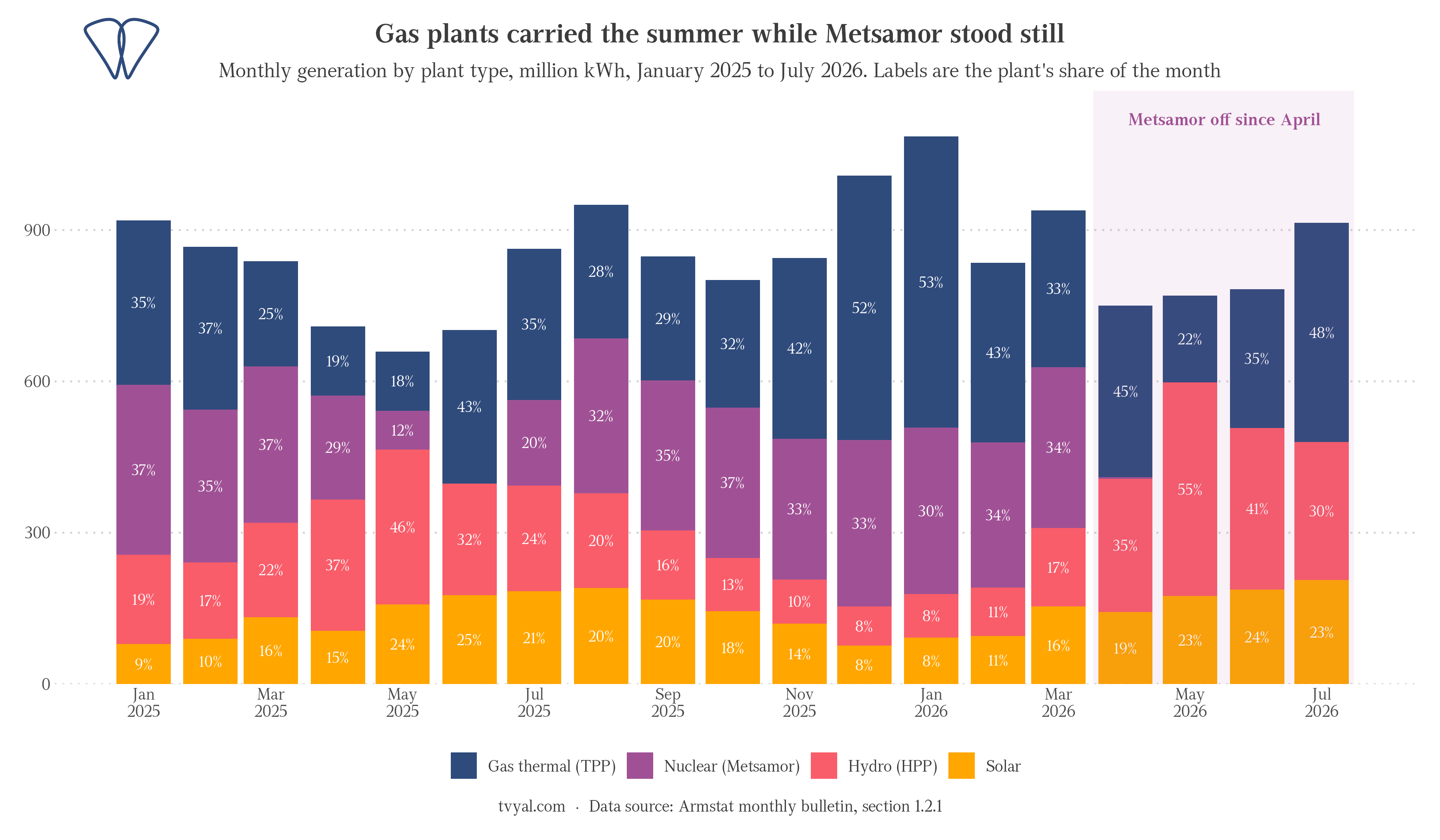
Since April, the absence of the nuclear power plant in the electricity generation structure has been compensated by an increase in the production volumes of thermal power plants (TPPs). In particular, in July, 48% of the country’s electricity was provided by thermal power plants, compared to 35% the previous year.
Where did the additional electricity generation come from?
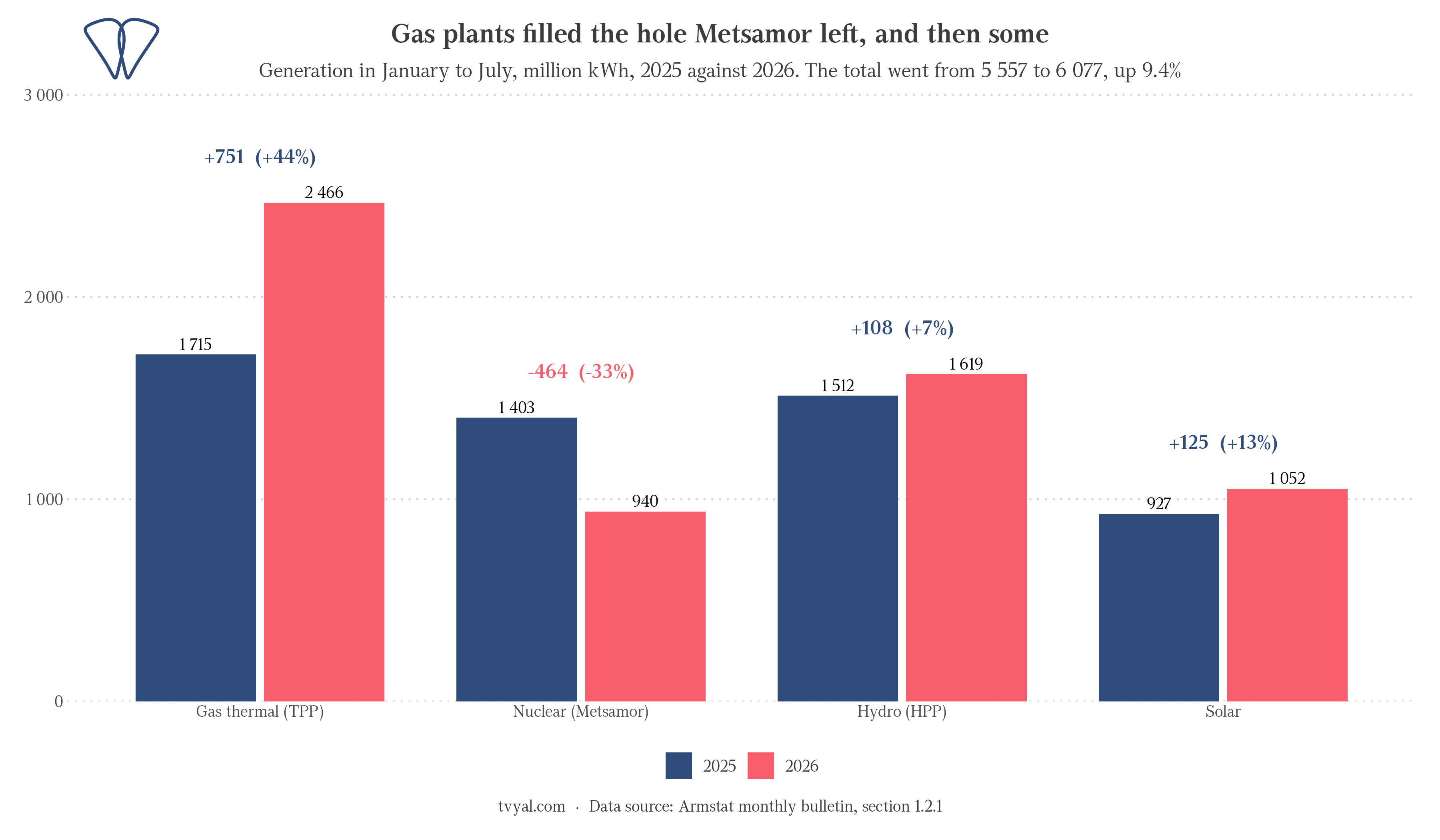
A study of statistical data for January-July shows that the production of the nuclear power plant decreased by 464 million kWh compared to the same period in 2025. At the same time, the production of thermal power plants increased by 44% or 751 million kWh. In fact, thermal power plants not only completely filled the volume of electricity not produced by the nuclear power plant, but also provided an additional production of almost 300 million kWh, because total electricity demand also increased by 9.4%.
An analysis of energy supply sources shows that, amid increased demand for electricity, gas imports are increasing, mainly due to Russian supplies. These volumes are being directed to thermal power plants to generate additional electricity. In the first half of 2026, natural gas consumption at thermal power plants increased by 58% compared to the same period last year [3]. Customs data also show this trend: in January-May, Armenia imported an unprecedented volume of natural gas, exceeding the figures of the previous eight years, and the growth was almost entirely due to Russian supplies.
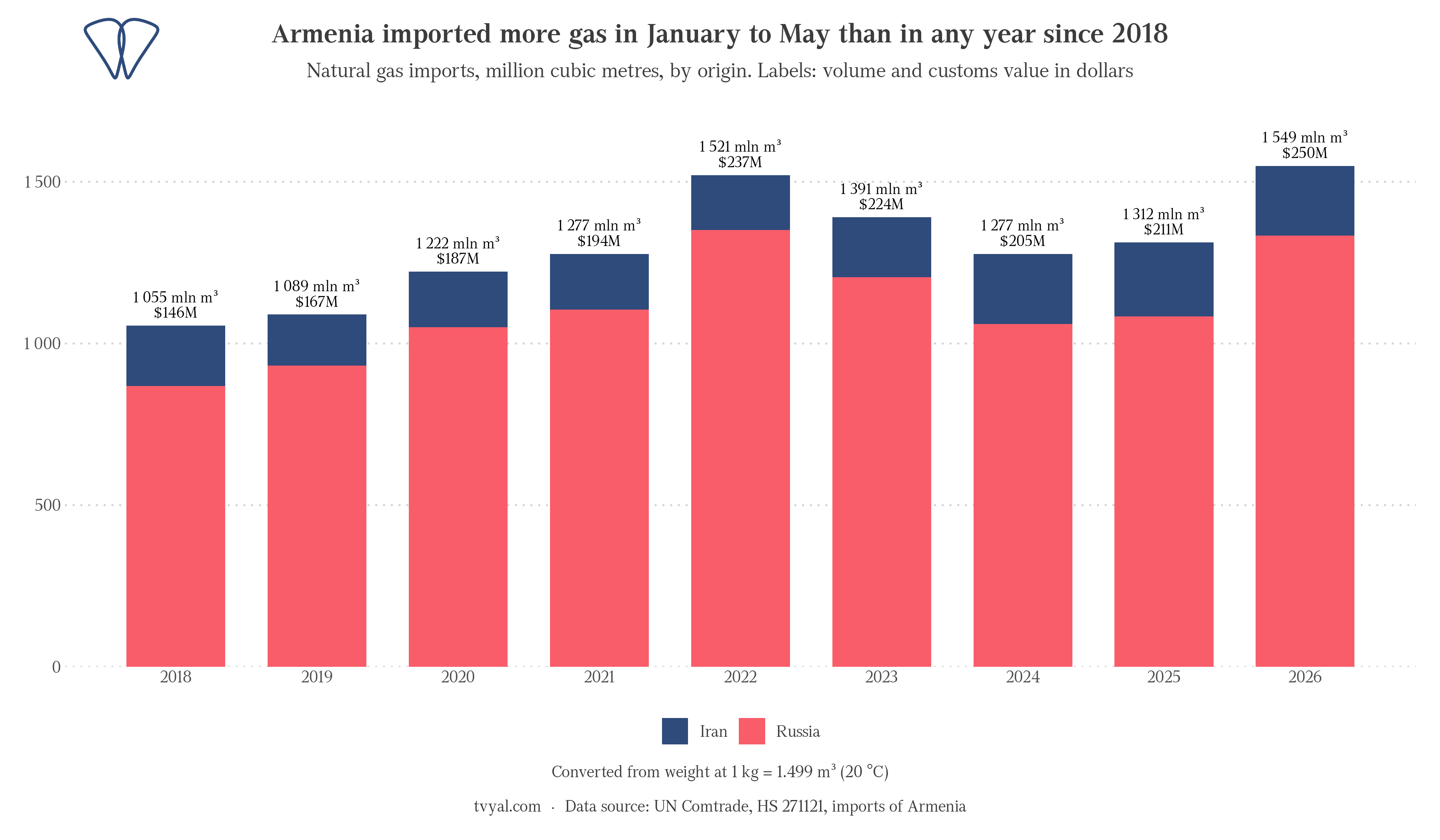
The cost of the additional 165 million cubic meters of gas to the power plants at the border price was about $29 million. This amount reflects the financial impact of the nuclear power plant outage, which is relatively small given the significantly lower cost of Russian gas compared to European market prices. However, there are hidden systemic risks that rarely come into focus. The gas supply contract with Russia expires at the end of this year. There have already been warnings from the Russian side about a possible revision of the zero-rate tariff that underlies the current preferential price, and the planned outages in September once again demonstrate the vulnerability arising from external dependence on supplies. As noted in the previous analysis, we already have an unprecedented increase in fuel prices, therefore a possible increase in the price of natural gas will inevitably lead to an increase in the price of electricity.
Unplanned increase in electricity demand
Despite the long-term shutdown of the largest power plant, the 9.4% increase in total production was due to unprecedented and unforeseen volumes of electricity consumption. It should be noted that in 2025, Armenia produced more than 10 billion kWh of electricity for the first time. In January of this year, a record consumption figure was recorded, exceeding the level of January of the previous year by 18%, and on December 30, a peak load of 1,547 megawatts (MW) was recorded in the distribution network, which is one-fifth higher than the previous winter’s figure [4]. During the same period, a fire at a substation in the Erebuni administrative district, according to the company’s official explanation, was due to a sharp increase in load. This already shows the vulnerability of the system.
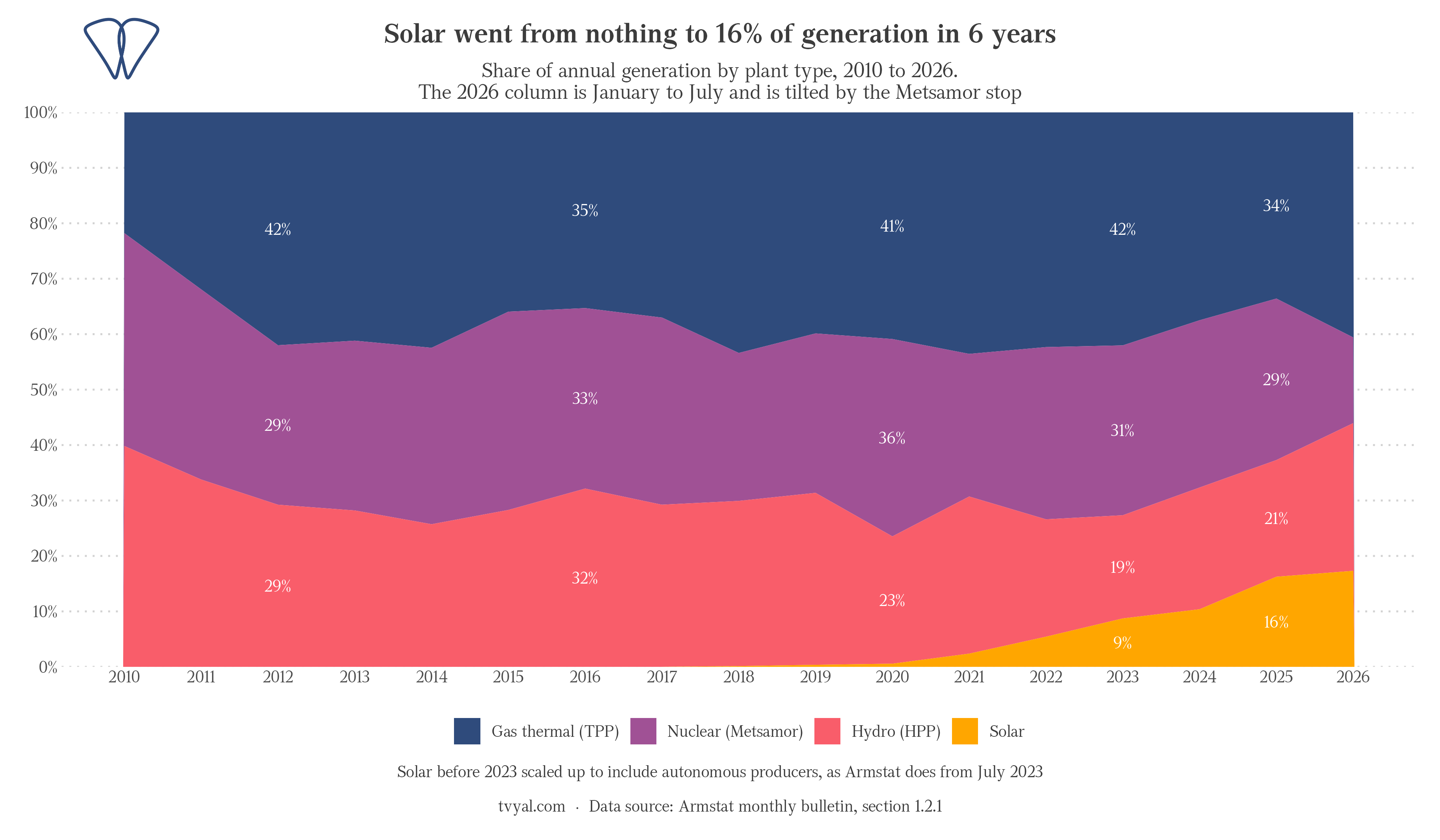
The main driver of the growth in electricity demand is the expansion of the use of electric vehicles. As a result of the increase in fuel prices, the transition to electric vehicles is accelerating, and this transition is as dramatic as the increase in the share of solar energy from zero to 16% in just six years. The quota for duty-free imports of electric vehicles for 2026 was increased from 15,000 to 20,000 in August, because the initial limit had been almost exhausted. The second factor is the construction sector: due to the difficulties in the process of gasification of newly constructed buildings, heating in about half of the buildings is provided by electricity. The third factor is the “Firebird” data center, opened on August 8 in Hrazdan, the declared capacity of which should reach 300 MW by the end of 2027 [5]. 300 MW is equivalent to 2.6 billion kWh of electricity for the whole year, which is a quarter of all electricity produced in Armenia in 2025 and nine-tenths of the output of the Metsamor Nuclear Power Plant. From the first two factors alone, an increase in electricity demand of about 40-50% is predicted over the next five to six years. Taking into account the related sectors contributing to the overall economic development of the country, there is a need to double the existing energy capacities. This process requires large-scale investments, which are still not sufficiently considered in public and professional discussions.
The government has already documented the situation. According to a statement made in parliament in June, a year ago Armenia could credibly consider that it had a “significant surplus” of electricity, while today it is necessary to consider the issue of creating new capacities. As early as late August, import possibilities were being discussed, including from Azerbaijan [6]. In fact, in just fifteen months, the energy system has transitioned from a “surplus” status to a demand-side import. Armenia may turn from an electricity exporting country into an importer.
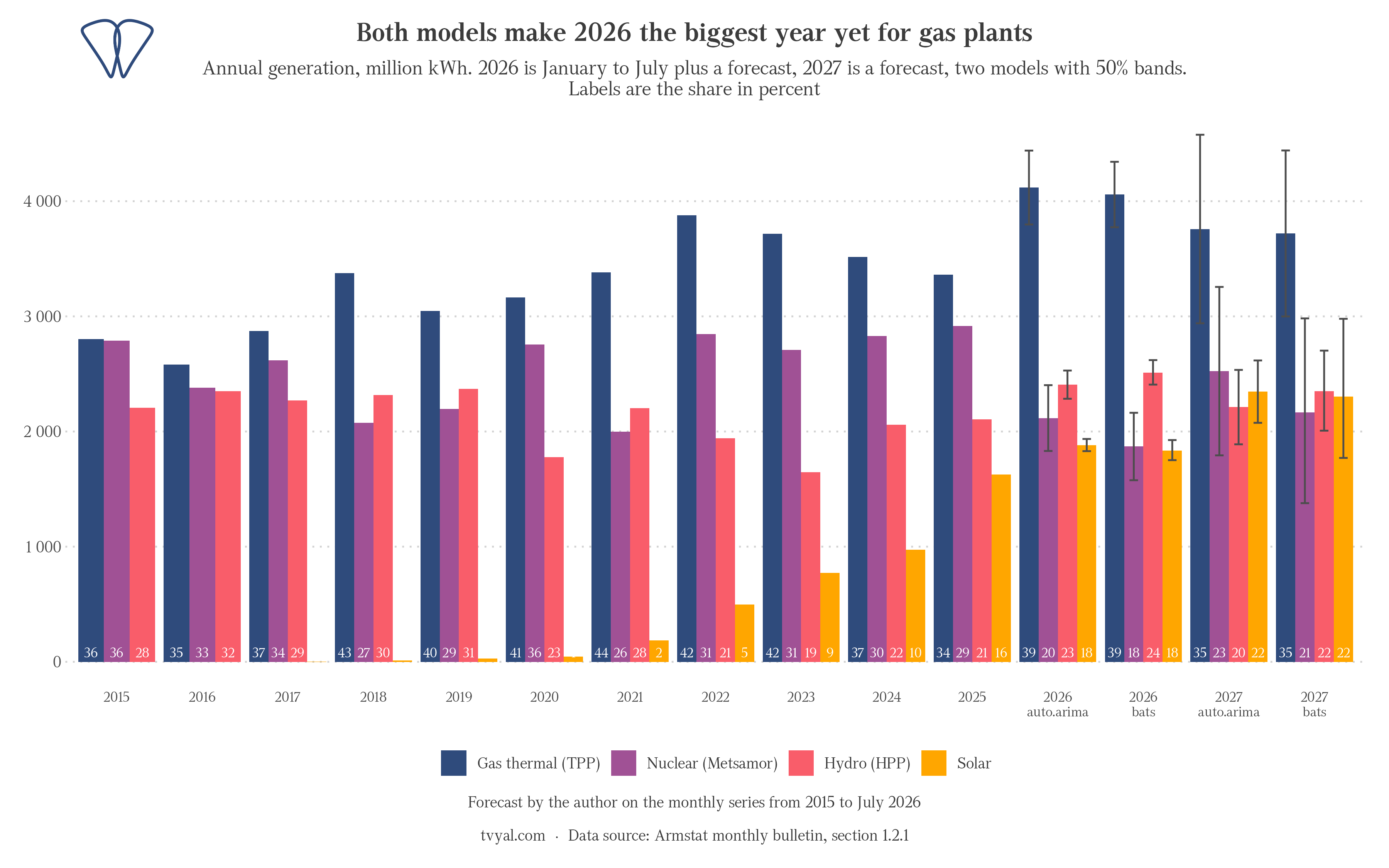
According to our two forecast models, which have been running since 2023, 2026 will be unprecedented in terms of thermal power plant production volumes, providing about 39% of total production. Since the models are not designed to assess the one-time nature of nuclear power plant downtime, the 2027 figures should be considered as minimum nuclear power plant production and maximum thermal power plant production thresholds.
The prediction that came true
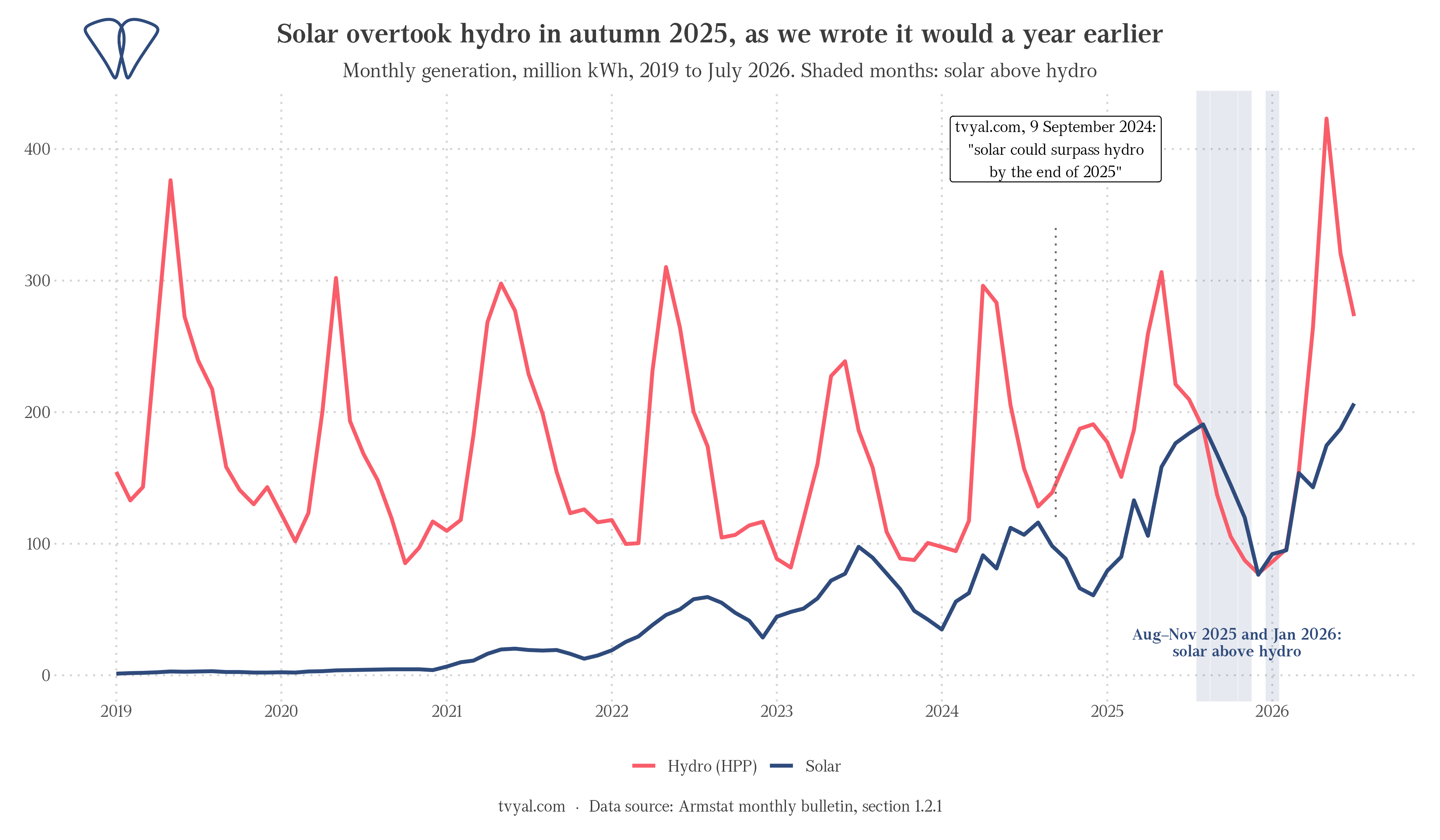
Two years ago, in September 2024, we predicted that by the end of 2025, the production of solar power plants could exceed that of hydroelectric power plants (HPPs), which actually came true. From August to November 2025, as well as in January 2026, solar plants provided a larger volume of electricity than hydroelectric power plants. For the whole year, the share of solar energy reached 16% of production, from zero six years ago. Although in the spring of 2026, hydroelectric power plants provided a record monthly volume of hydropower production, the development trends of both sectors are maintained.
This seemingly positive dynamic is accompanied by systemic problems. The promotion of solar energy, although contributing to energy security and independence, contains vulnerabilities, creating a risk of systemic collapse. In particular, Armenia’s power system was not originally designed to integrate solar electricity, while the latter is characterized by pronounced seasonal and daily fluctuations. Peak production is observed at noon, but maximum demand occurs in the evening hours. As of September, 59,000 solar plants with a total capacity of 1,288 MW were connected to the distribution network [7]. This figure is more than four-fifths of the record winter peak load and exceeds the country’s consumption at noon in summer. Given this circumstance, government policy is aimed at ensuring a balance between the growth of solar energy and the stability of the system. As of May 1, the maximum allowable capacity of autonomous power plants was reduced from 150 to 50 kilowatts. The justification for this legislative change cited reactive power shortages and frequency fluctuations as the main reasons.
The electric duck problem
Electricity is a unique product, the production and consumption of which must be carried out simultaneously. This principle is key to the analysis of the last graph. Since hourly statistics are not published in Armenia, the curve was constructed based on monthly indicators, the daily load graph of Armenia and the geography of solar activity for Yerevan. The methodology is presented below. The resulting picture corresponds to the “duck curve” described by California power system engineers a decade ago. In June 2019, at 1:00 PM on an average statistical day, solar energy covered only 2% of demand. By June 2026, it provided almost 100% of demand, as a result of which the rest of the system is obliged to produce only a few dozen MW. In the evening hours, as the sun sets, other plants must increase production by about 650 MW over three hours to meet peak demand. For comparison, in 2019, this increase was 150 MW.
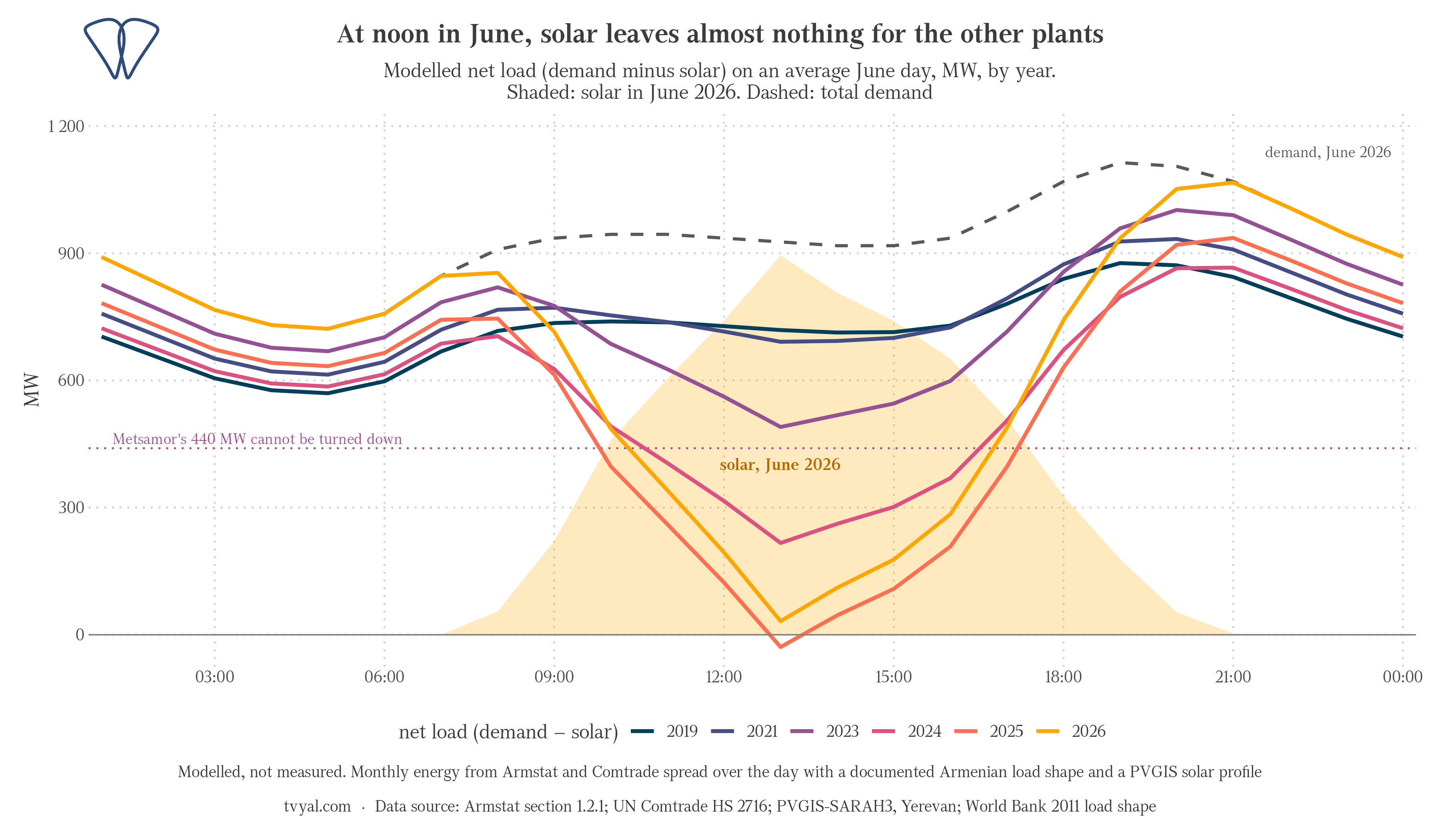
It is necessary to consider which plants have the flexibility to increase production sharply. The Metsamor nuclear power plant lacks this flexibility. Its 440 MW capacity is maintained at a constant level, regardless of demand. If the plant were to be operational in June of this year, an unconsumed surplus would form at noon. It takes hours to adjust the production volumes of large thermal power plants. Hydropower is more flexible, since by regulating the flow of water, it is possible to immediately increase or decrease electricity generation. However, in the autumn months, solar production already exceeds that of HPPs. Currently, peak demand in the evening hours is mainly met by HPP production and thanks to the barter program with Iran. The barter program with the Islamic Republic of Iran (exporting electricity at noon and importing gas in return) effectively serves as a system accumulator, absorbing the excess part of the “duck curve”. At the same time, it is necessary to take into account that this process is being carried out with a state that is currently in a complex geopolitical conflict.
In 2019, the demand for increased evening generation was 150 MW. In 2026, it is 650 MW, and each additional megawatt of solar power exacerbates this systemic mismatch.
The solution to the current situation can be implemented using Armenia’s geographical location. Steps in this direction should be taken as soon as possible, even with a certain subordination of environmental concerns, taking into account that this is a matter of national security. We are talking about the construction of pumped-storage power plants (PSPPs), which are based on the logic of operating water basins located at different altitudes. In the afternoon, such a system operates in pumping mode, consuming excess electricity and pumping water into the upper basin, and in the evening, water is released into the lower basin, ensuring generation on the principle of a traditional hydroelectric power plant. In fact, an accumulator of excess electricity is formed. Given the mountainous terrain of Armenia and significant differences in altitude, the creation of such infrastructure is of great importance. Although the law on energy storage came into force back in May, a corresponding tender has not been announced to date.
* Data on production volumes by type of power plants are based on publications in section 1.2.1 of the monthly socio-economic bulletin of the National Statistical Service of Armenia (from 2007 to July 2026). Natural gas import statistics are based on monthly reports submitted by the Republic of Armenia to the UN Comtrade database (until May 2026). Weight was converted to volume at the ratio of 1 kg to 1.499 cubic meters. Forecasts were carried out using auto.arima and BATS models based on monthly series starting from 2015, with a 50% interval. The “duck curve” is modeled, not measured. Monthly net production (production minus exports plus imports) was distributed by day using the typical daily load schedule for Armenia published by the World Bank in 2011, and monthly solar energy production was distributed using the “PVGIS-SARAH3” hourly profile for south-facing panels in Yerevan (the same load schedule was assumed for all months).
References
[1] Ռուսաստանից Հայաստան բնական գազի մատակարարումը ժամանակավորապես կդադարեցվի, 14 September 2026 // Aravot — https://www.aravot.am/2026/09/14/1579767/
[2] Հայկական ԱԷԿ-ի երկրորդ էներգաբլոկը հնգամսյա նորոգումից հետո միացվել է էներգահամակարգին, 4 September 2026 // Armenpress — https://armenpress.am/hy/article/1259673
[3] Հայաստանում 2026-ի առաջին կիսամյակում գազի սպառումն աճել է ՋԷԿ-երի աշխատանքի հաշվին, 3 September 2026 // Sputnik Արմենիա — https://arm.sputniknews.ru/20260903/hajastanum-2026-i-arajin-kisamjakum-gazi-sparumn-atshel-e-jek-eri-ashkhatanqi-hashvin-106443296.html
[4] ՀԷՑ. 30 դեկտեմբերին էներգահամակարգի բեռը կազմել է 1547 ՄՎտ, 30 December 2025 // Factor.am — https://factor.am/969479.html
[5] Firebird opens region’s largest AI data centre in Armenia, 8 August 2026 // OC Media — https://oc-media.org/firebird-opens-regions-largest-ai-data-centre-in-armenia/
[6] We are discussing importing and selling electricity with Azerbaijan, Georgia, Iran and Türkiye, 27 August 2026 // Public TV of Armenia — https://www.1lurer.am/en/2026/08/27/We-are-discussing-topic-of-importing-and-selling-electricity-with-Azerbaijan-Georgia-Iran-and-Turke/1567088
[7] ՀԷՑ. բաշխիչ ցանցին միացված է շուրջ 59 000 արևային կայան՝ 1288 ՄՎտ հզորությամբ, 3 September 2026 // Armenpress — https://armenpress.am/hy/article/1259636