Orphan railway: the future of a one-exit system
On October 14, the Prime Minister of Armenia and the head of Russian Railways agreed to form a working group. It will become clear in the next three months whether Russia will invest in the Armenian railway system [1]. Although the current discussions mainly focus on selecting a manager, it is advisable to consider the issue in terms of what the infrastructure is for. The Armenian railway is currently isolated. In international practice, railway networks carry most of the trade between states or within the country. Meanwhile, in the Republic of Armenia, the railway links only Yerevan and Tbilisi, so its operating efficiency is low compared to the potential.
Only one of the four borders is operational
Of Armenia’s four state borders, only the border with Georgia has a functioning railway crossing. The map shows the lines to Turkey and Nakhchivan as unused or abandoned, and according to World Bank estimates, 83% of Armenia’s land borders are closed, with only one railway link operating [3].
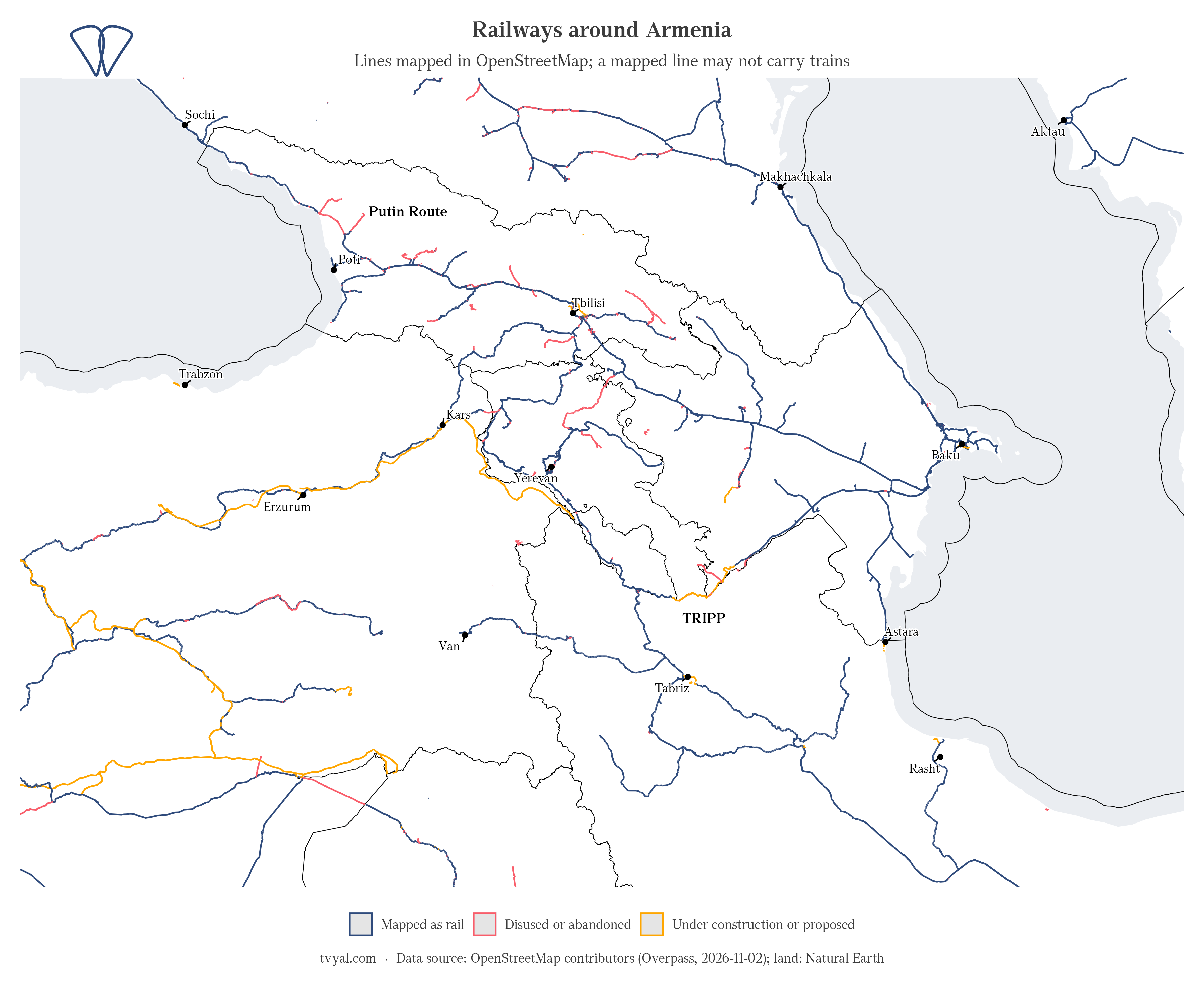
In 2008, the concession agreement was signed in anticipation of a change in the regional situation. It is no coincidence that the agreement to transfer the South Caucasus Railway (SCR) CJSC to Russian concession management was signed in 2008, at the start of the Russian-Georgian war and the complete closure of the mentioned railway route. The basis was the strategic calculation that within 30 years the problem would be resolved, and a direct rail link with Russia would run through Armenia. The agreement runs until 2038. The railway infrastructure is the property of the Republic of Armenia, and the operator is a subsidiary of Russian Railways [1]. Eighteen years have passed since the agreement was signed, but international connections still go only through the one route to Tbilisi.
Limited capacity of the railway network
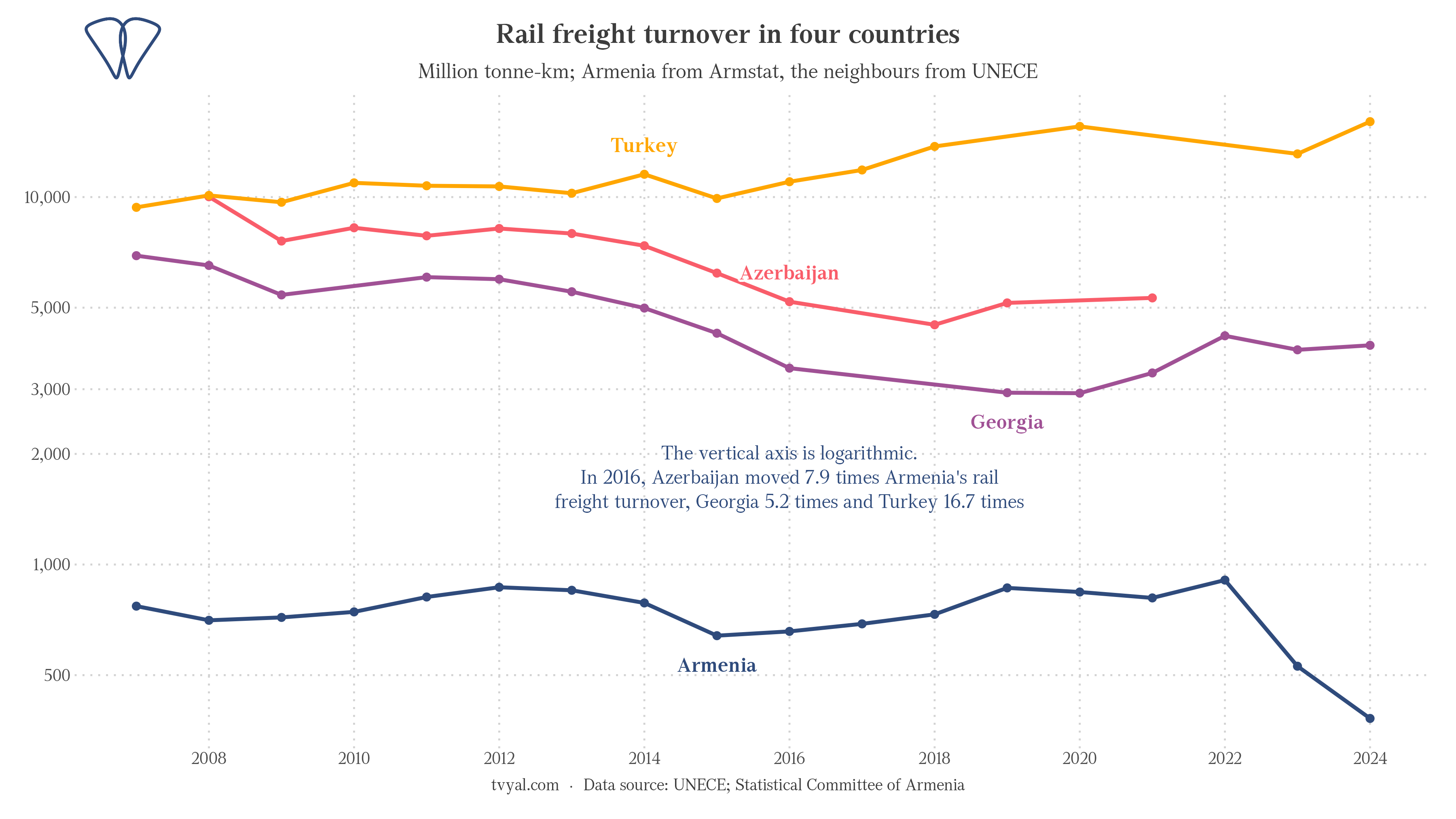
The limited capacity of Armenia’s railway network becomes even more apparent in comparative statistics. In 2024, Georgian railways (which have the same gauge) carried ten times more freight than Armenia’s. At the same time, Armenia’s freight turnover decreased from 907 million ton-kilometers in 2022 to 381 million ton-kilometers in 2024, a 58% decline.
Structure of rail freight transport
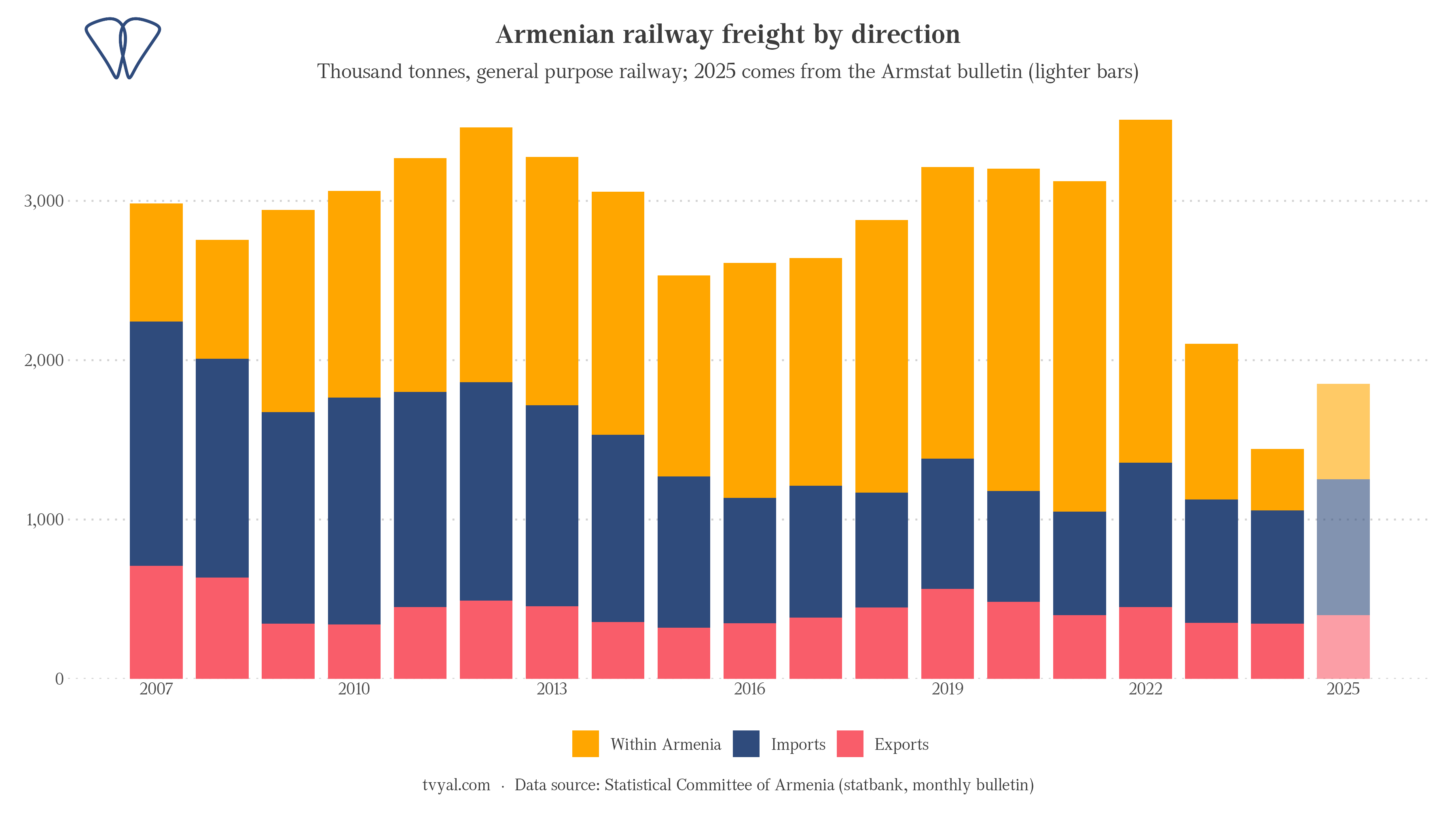
The decrease in cargo volumes was not caused by exports. Total cargo volumes decreased from 3.5 million tons in 2022 to 1.4 million tons in 2024, with the bulk of the decline attributable to non-ferrous metal ore moved domestically (from mines to processing plants). In particular, shipments from Armenian stations decreased from 2.05 million tons to 0.34 million tons. In 2025, the total volume increased by 28%, amounting to 1.85 million tons [2], while import volumes by rail remained within the range of 700-900 thousand tons throughout the period.
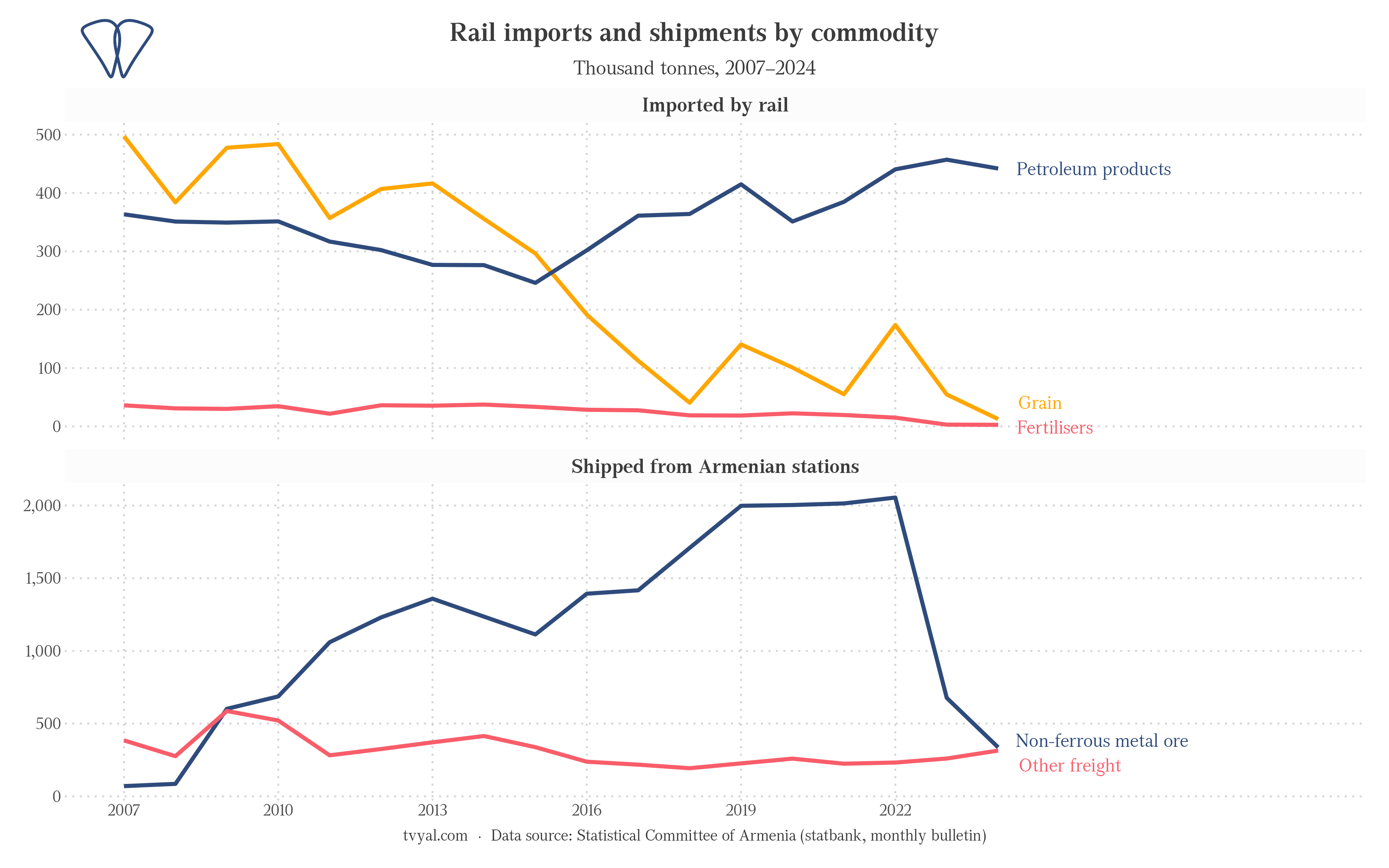
Despite the low capacity of the railway compared to the potential, it is vital to the economy of the Republic of Armenia, since gasoline, fuel and grain (in particular, wheat) mostly arrive by rail. The annual volume of gasoline imports is about 450 thousand tons, which in 2025 amounted to 473 thousand tons. However, wheat deliveries followed a very different path. If in 2007 about 500 thousand tons of grain were transported by rail, then in 2024 and 2025 this figure amounted to 12.5 thousand and 55 thousand tons, respectively, which indicates that alternative means of transport now carry the bulk of grain imports.
Long and complex logistics chains
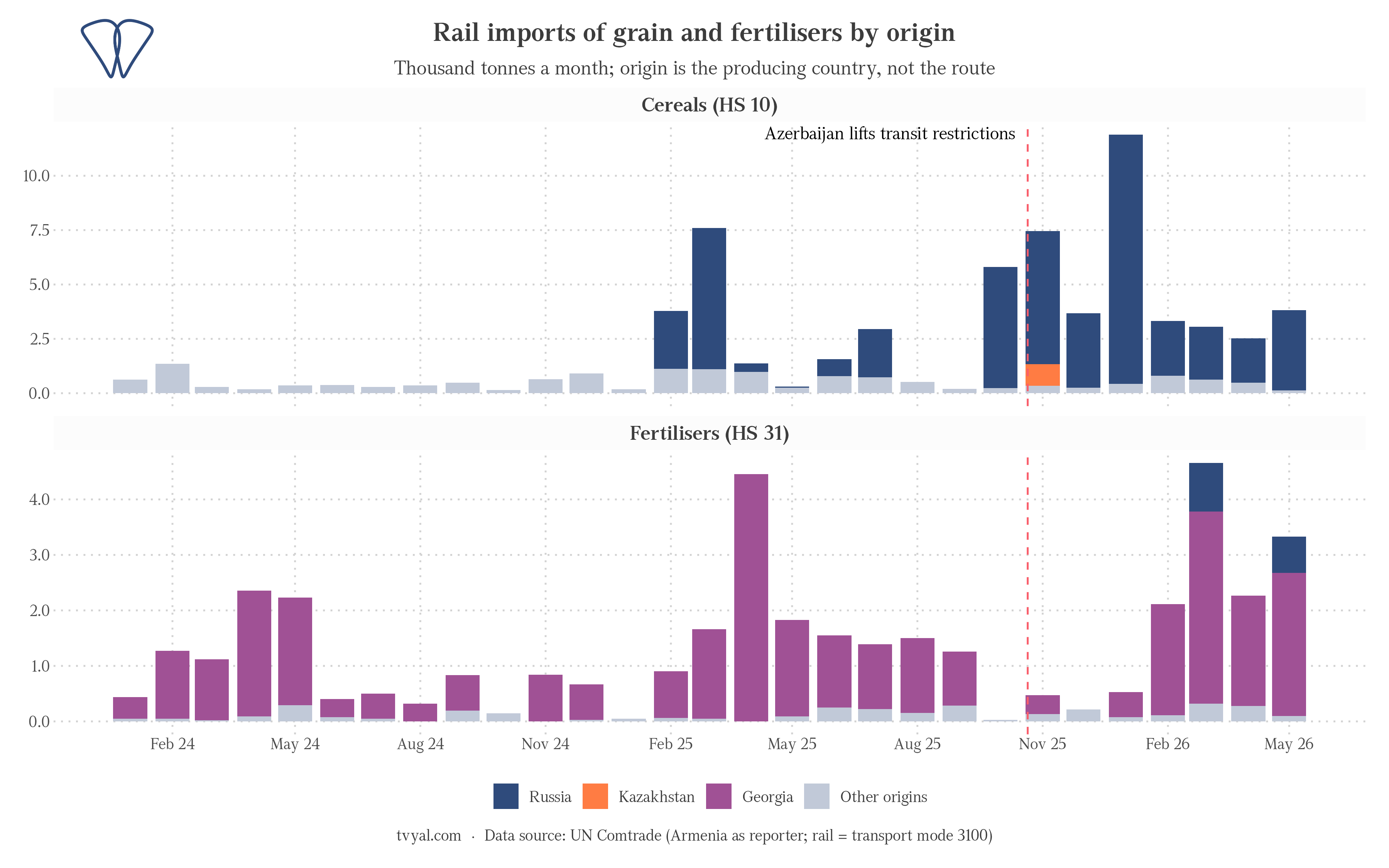
From a logistical point of view, freight transportation from the Russian Federation is economically inefficient. In particular, cargoes first arrive at Black Sea ports, then are transported by sea to the port of Poti, from where they continue their journey to Armenia by rail. Although there is a cheaper alternative, it is still being tested. On October 21, 2025, Azerbaijan lifted transit restrictions, and as a result, starting in November, Russian and Kazakh cargoes began to reach Armenia by rail through the territory of Azerbaijan and Georgia [4]. Statistical data show that rail imports of Russian grain have been observed mostly since November 2025: in 2025, 27.7 thousand tons, and in January-May 2026, 22.1 thousand tons. At the same time, since December, fuel imports of Azerbaijani origin have also appeared; in the first five months of 2026 they came to $12.2 million. However, freight transportation is currently one-way, directed towards Armenia. There have been no confirmed exports of Armenian goods in the opposite direction. The process is still being planned, and since June Russia has blocked a significant part of goods Armenia exports, which complicates it further.
The share of rail transportation
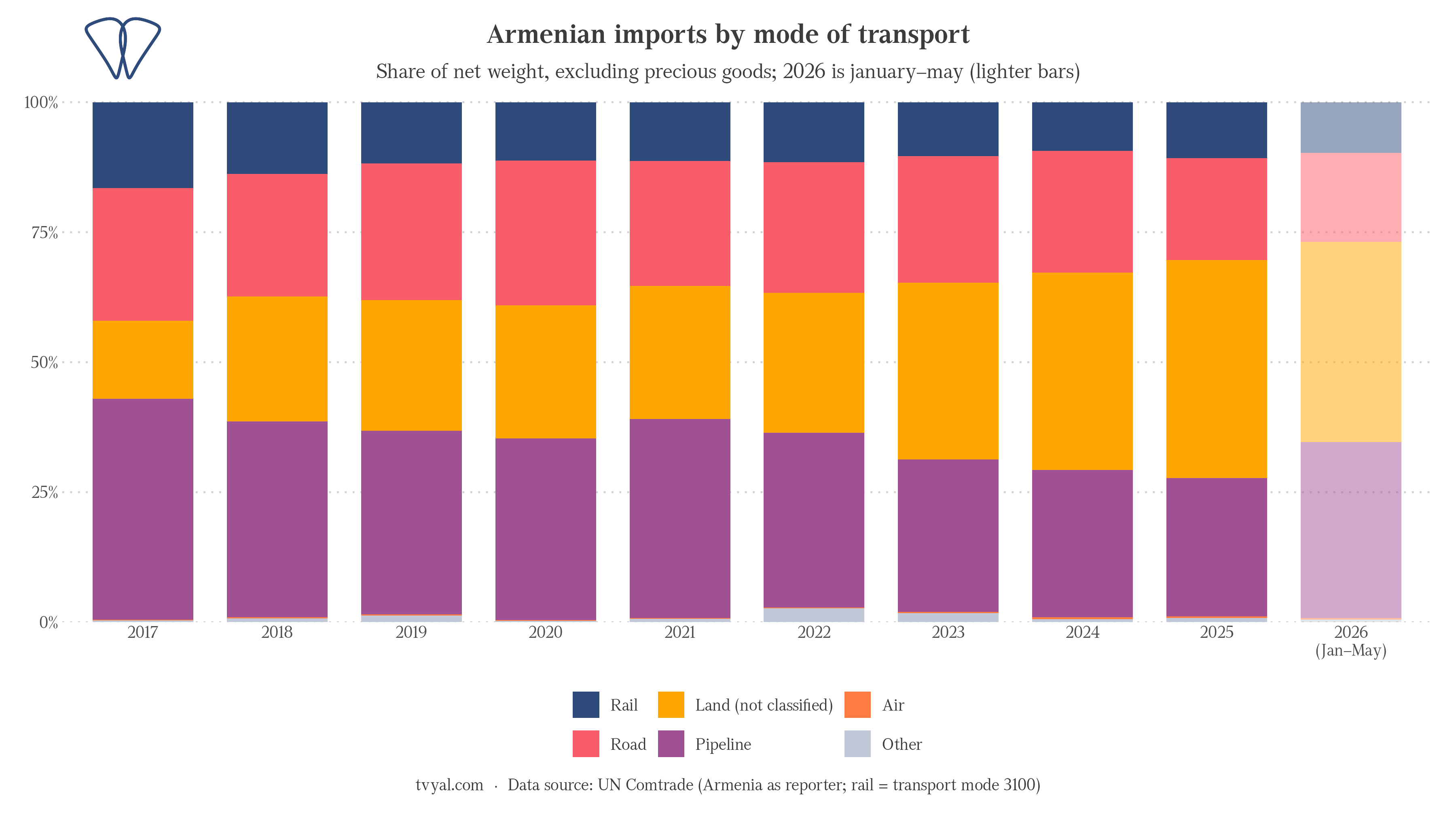
The railway system is not the main means of transport for goods imported into Armenia. Apart from precious goods, since 2017, only 9 to 17% of the physical volume (in tons) of imported cargo has been transported by rail. The remaining volumes are provided by road transport, pipelines (gas), as well as roads registered in customs statistics as “unclassified overland”. Railway development rests not on today’s share but on future potential. In particular, if it becomes possible to integrate the Armenian railway into broader regional networks, its economic efficiency will rise many times over. Priority is given to developing freight rather than passenger transportation. Railway integration will allow large businesses to bypass the problems that periodically arise at the Verkhny Lars checkpoint by sending cargo by rail, which will significantly reduce transportation costs. As a result, Armenia will gain alternative, sustainable export and import routes, where unreliable passage through Verkhny Lars and the corruption risks around it will be removed. In addition, new logistics routes will create opportunities for exporting and importing products whose transportation was not previously economically profitable.
Common vision, different gauges
Two new routes for developing transport communications are currently being discussed. Both TRIPP (the Zangezur route) and the option proposed by Russia contain significant geopolitical risks. Since potential investors aim for long-term profitability, possible geopolitical instability may block the implementation of these projects. The second project, the so-called “Putin Route”, runs through Abkhazia and Georgia. The Russian think tank announced this initiative back in May, and in September it came up again at a conference in Yerevan. However, the project still lacks a clear financial assessment, implementation schedule and funding sources, and it has not been officially approved [5].
In addition to geopolitical factors, there are also purely physical and infrastructural limitations. The railway systems of Armenia, Georgia, Azerbaijan and Russia operate on a 1520 mm gauge, while Turkey and Iran use a 1435 mm gauge. Direct, uninterrupted rail communication from Armenia to Turkey is impossible. Where the gauges differ, trains must stop to reload cargo or replace wheelsets. The same is already done at Akhalkalaki station on the route from Georgia to Kars. This technical discrepancy, although entirely manageable, costs extra time and money. The process is inevitable for all routes to Turkey, including Armenian ones.
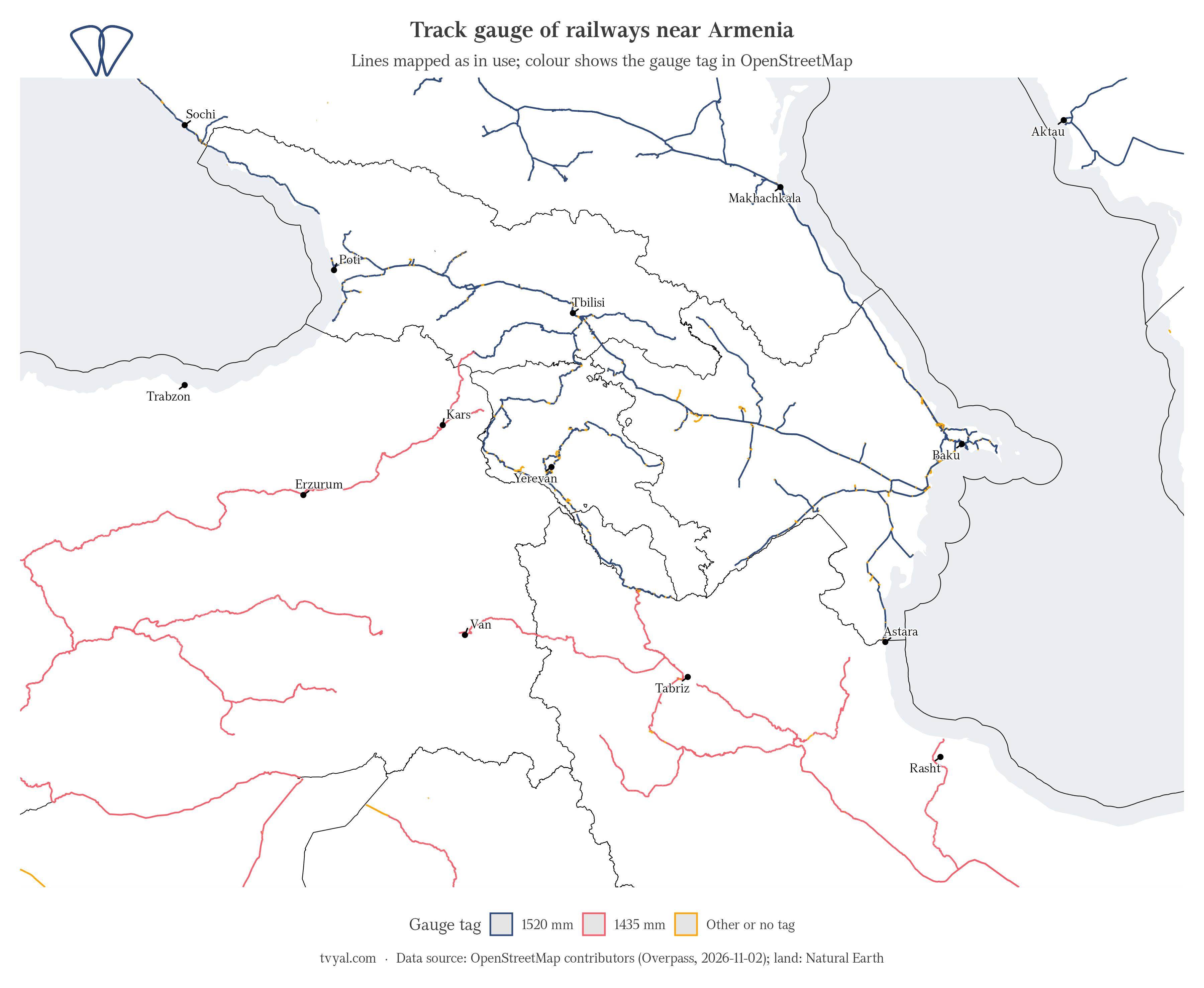
Turkey is already building the Kars–Nakhchivan railway, 224 km long, with financing of about €2.4 billion. This railway is expected to be completed in 2030. This line bypasses Armenia, while the old Gyumri–Kars link is about 60 km long, closed since 1993, and the World Bank estimates the renovation of its Turkish section at about $150 million [3]. The Gyumri–Kars railway is shorter and cheaper. It is also a geopolitical lever for Armenia, since in this case the gauge break point, and with it the terminal, will be located on Armenian territory.
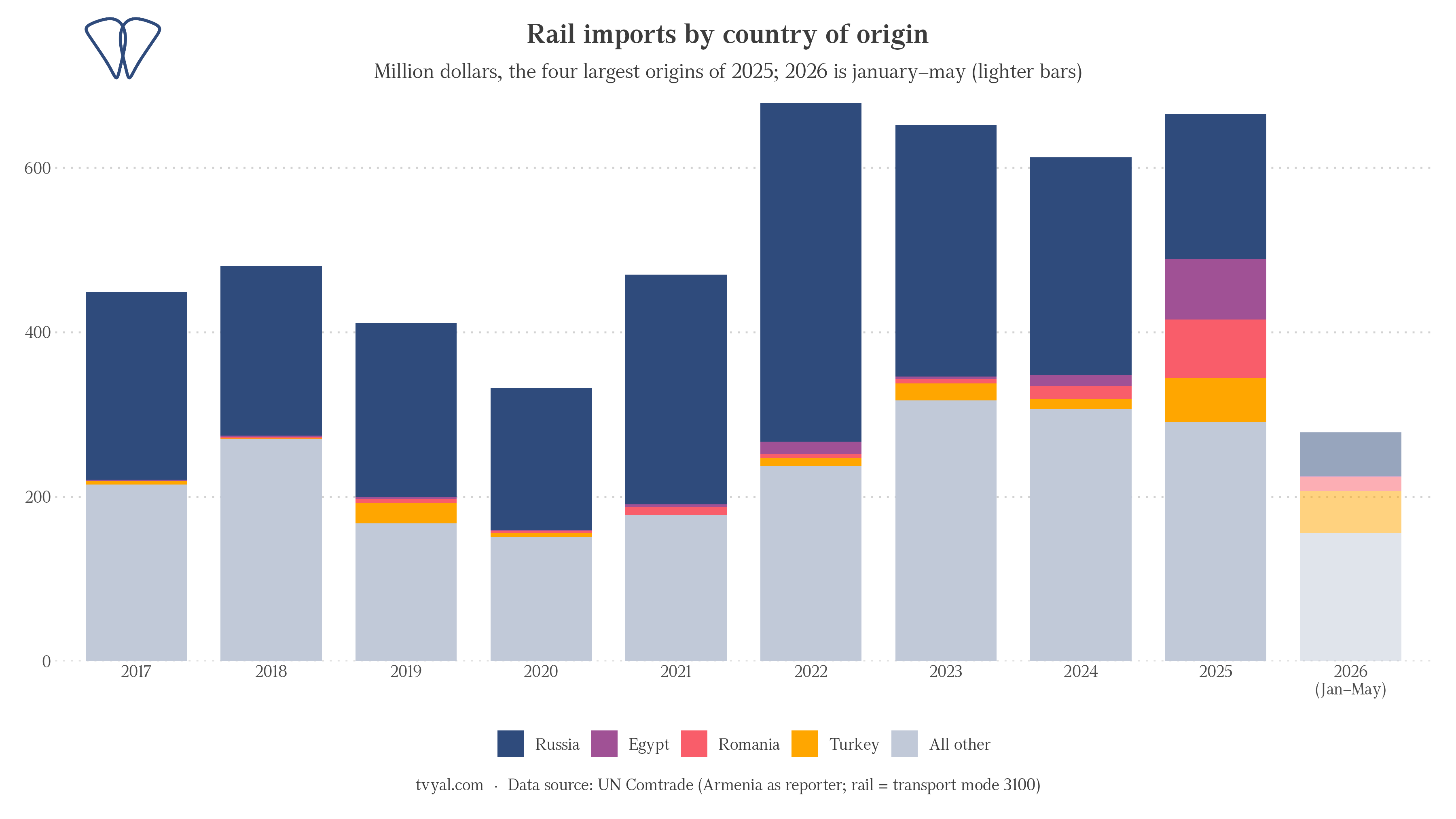
Turkey is already expanding its rail freight volumes, and since May, the Akhalkalaki–Kars railway has also become available for Armenian cargo. Statistical data show that until 2025, rail imports from Turkey ranged from $13 to 21 million annually. In 2025, this figure increased to $53.5 million, and in January-May 2026 alone, it amounted to $51.2 million. However, Russia remains the largest source, with imports of $176 million in 2025.
Investment need and sources of financing
Whoever runs the railway in future, the operation of the infrastructure requires initial capital investments. The role of the Russian side is limited, since the railway is considered a commercial, purely profit-seeking project. This approach, however, is problematic, since infrastructure of this kind has clear strategic importance, which requires a significant increase in investment volumes. From a legal point of view, the situation is clear: Russia holds the concession until 2038, therefore, any transfer of management rights requires the consent of the Russian side. Among the potential operators, Kazakhstan, where the EAEU treaty was signed, is most often mentioned. In addition, the Prime Minister of Armenia mentioned the United Arab Emirates and Qatar as potential partners [1]. Given the closures of mining enterprises, the economic justification for investments is no longer based on the volume of current freight transportation, but on the strategic value of the system.
Meanwhile, local infrastructure improvements do not require intergovernmental agreements. In particular, the main railway station of Armenia, “Sasuntsi Davit”, is in an unsatisfactory condition. A significant part of the territory is allocated to retail outlets, so the station no longer serves its original function and does not meet modern, international standards. The overhaul and modernization of the “Sasuntsi Davit” station, even if it does not provide direct commercial profit in the short term, can significantly improve the public and social environment and stimulate the further development of the sector.
On the same topic: “Railway and TRIPP: what is in Armenia’s interest?”. On fuel imported by rail: “Gasoline price shock: where did the Russian fuel disappear to?”
P.S. The addendum below was added two and a half hours after publication, on November 6, 2026.
Geopolitical risks, their manifestation and mitigation
External factors mainly determine the economic feasibility of the TRIPP project. According to World Bank estimates, the possible growth of the Republic of Armenia’s GDP by 3.4% in the 2040 scenario is based on the assumption that the borders with Azerbaijan and Turkey will be unblocked [3]. The process is assessed as slow. Therefore, the construction of infrastructure may run ahead of the expected financial return. Since investors are guided by long-term profitability, geopolitical instability may hinder the implementation of both the TRIPP project and the Russian route.
Turkey has initiated the construction of the Kars–Nakhchivan railway (224 km, about €2.4 billion, expected completion in 2030), which bypasses Armenia. After this project is completed, demand for Armenian infrastructure in the Kars direction may decrease. The Armenian transit section is about 40 km. In the transport strategy developed with financing from the Asian Development Bank, the direct economic benefits of the project are estimated to be limited, and no source could be found for $10–15 million in annual income voiced by the host.
The forecasts linking TRIPP to the Middle Corridor are overly optimistic. The World Bank report does not mention TRIPP, and Armenia’s gain is based on the assumption that the Azerbaijan–Armenia–Turkey railway will be constructed. There is no operational railway connection from Nakhchivan to Yerevan via the Yeraskh–Sadarak section, and cargo passing through Nakhchivan could enter Turkey directly, bypassing Armenia, after the operation of the Kars–Nakhchivan line. In that case, Armenia’s direct benefits would be limited to the transit section.
Concession management of the SCR is reserved for Russia until 2038. At the same time, a significant part of Armenian exports has been blocked since June. Transferring management rights requires the consent of the Russian side.
Longer timelines are expected, rather than a systemic disruption. Financing depends on political developments. Infrastructure work within Armenia runs ahead of border agreements, while freight transportation continues via the Georgian route. It is likely that the gauge break point will be located on the Nakhchivan–Turkey border. Since official data on the gauge of the Kars–Nakhchivan railway and the location of the reloading station have not been published, it is assumed that in such a scenario Armenia will provide only transit, without a terminal on its territory.
The following solutions are proposed to mitigate the risks:
- Phased financing: Armenia should finance in phases, making each allocation conditional on clear results in unblocking the borders or signing the relevant agreements, and avoiding upfront costs.
- Including the Gyumri–Kars section: Consider the Gyumri–Kars route in the projects. It is shorter and more cost-effective than the Nakhchivan route (according to World Bank estimates, the Turkish section costs about $150 million). In this case, the gauge break point will be located on Armenian territory, which creates an additional geopolitical lever.
- Maintaining existing logistics: Ensure uninterrupted operation of the Georgian route and the Russian channel, as they carry the existing freight turnover.
- Clarifying the operator: Use the three-month working group format to settle the network operator issue before new actors are brought in.
- Diversifying financing: Consider alternative sources of funding, in particular the involvement of Kazakhstan, the United Arab Emirates and Qatar.
- Independent assessment: Conduct an independent professional assessment of freight volumes and expected revenues, replacing unsubstantiated statistical data.
- Infrastructure modernization: Renovate the “Sasuntsi Davit” station, which does not require intergovernmental agreements.
* Data on rail freight transportation in Armenia are taken from the Statistical Committee database (general purpose railway, up to 2024) and the monthly bulletin (2025). Data on turnover for Georgia, Azerbaijan and Turkey are from the transport database of the United Nations Economic Commission for Europe (UNECE). Data on trade by means of transport and countries of origin are presented according to the UN Comtrade database (Armenia as a reporter, rail transport mode 3100, data for January-May 2026). In customs statistics, the partner is the country of origin of the goods, not the route of the freight transportation. The railway lines on the maps were built from OpenStreetMap data. The mapped line is a purely geometric representation and does not document the actual operation of trains, and the notes on the gauges are incomplete.
References
[1] What awaits the Armenian railway? Discussion in the SHANT News studio // SHANT News, 16 October 2026 – youtube.com
[2] Socio-economic situation of the Republic of Armenia, January–December 2025 // Statistical Committee of the Republic of Armenia – armstat.am
[3] Integration: World-Class Trade Logistics Along the Trans-Caspian Transport Corridor, Box 4.5 // World Bank, 2026 – hdl.handle.net
[4] Azerbaijan Permits Transit of Commercial Goods to Armenia // Jamestown Foundation, October 2025 – jamestown.org
[5] Проект «Путь Путина» заинтересовал экспертное сообщество // RIA Novosti, 28 September 2026 – ria.ru