The Blowing Wind: Why Has Armenia's Economy Started to Slow Down?
The Central Bank’s November 3 statement documents the slowdown in economic activity [1]. tvyal.com had already addressed this issue a month and a half ago, days after the Central Bank raised the key refinancing rate and before the publication of remittance statistics for August and September. Note that Armenia’s economy grew about twice as fast as the global average, due to the inflow of capital formed as a result of external geopolitical processes. A change in this money flow in any direction is a primary risk for economic growth.
The real growth rate of Armenia’s economy
In the first nine months of 2026, economic activity grew by 6.9% [2]. According to the International Monetary Fund, global economic growth will amount to 3.1% this year [3]. Armenia’s long-term average economic growth rate is 5-5.5%. Such growth can be ensured in the long term exclusively at the expense of domestic potential, without the formation of overheating risks. International organizations and the Central Bank of Armenia treat this indicator as the guideline for projected economic growth [4]. Higher medium-term economic growth is largely due to global geopolitical and economic changes that are beyond Armenia’s control. Such financial flows are not permanent: they can both suddenly stimulate economic growth and sharply drain away, causing risks of economic recession. This is, so to speak, the apocalyptic scenario.
Note that Armenia’s recent economic growth has been largely speculative in nature and has contributed mainly to the growth of the financial system and real estate prices. It has not had a significant impact on the real economy. This circumstance also justifies the last two increases in the Central Bank’s refinancing rate, as well as statements about the overheating of the economy. The recorded growth significantly exceeds the actual potential of the economy: the economy has grown at a rate almost twice the global average. However, the growth rate is already slowing down: in the second quarter, GDP grew by 6.7%, and economic activity amounted to only 5% in September, compared to 7.9% in the first half of the year [2]. In the current conditions, the priority is not to maintain high economic growth, but to ensure a smooth landing of the economy, which has been booming thanks to external flows.
Such events have been recorded in the economic history of Armenia before. This pattern is periodic. In the last four years, positive shocks from external factors (the inflow of Russian capital in 2022, the re-export of gold in 2023 and 2024, the Iranian financial flows in 2025, and the second inflow of Russian capital in the third quarter of this year) showed up in the growth figures, at the same time leading to an increase in rental prices and the appreciation of the Armenian dram. We have periodically addressed this issue in previous analyses. Each wave has increased macroeconomic indicators, in particular, GDP growth. Moreover, these increases were mainly caused by external factors and were not created at the expense of the internal capabilities of the Armenian economy.
The wind of money transfers
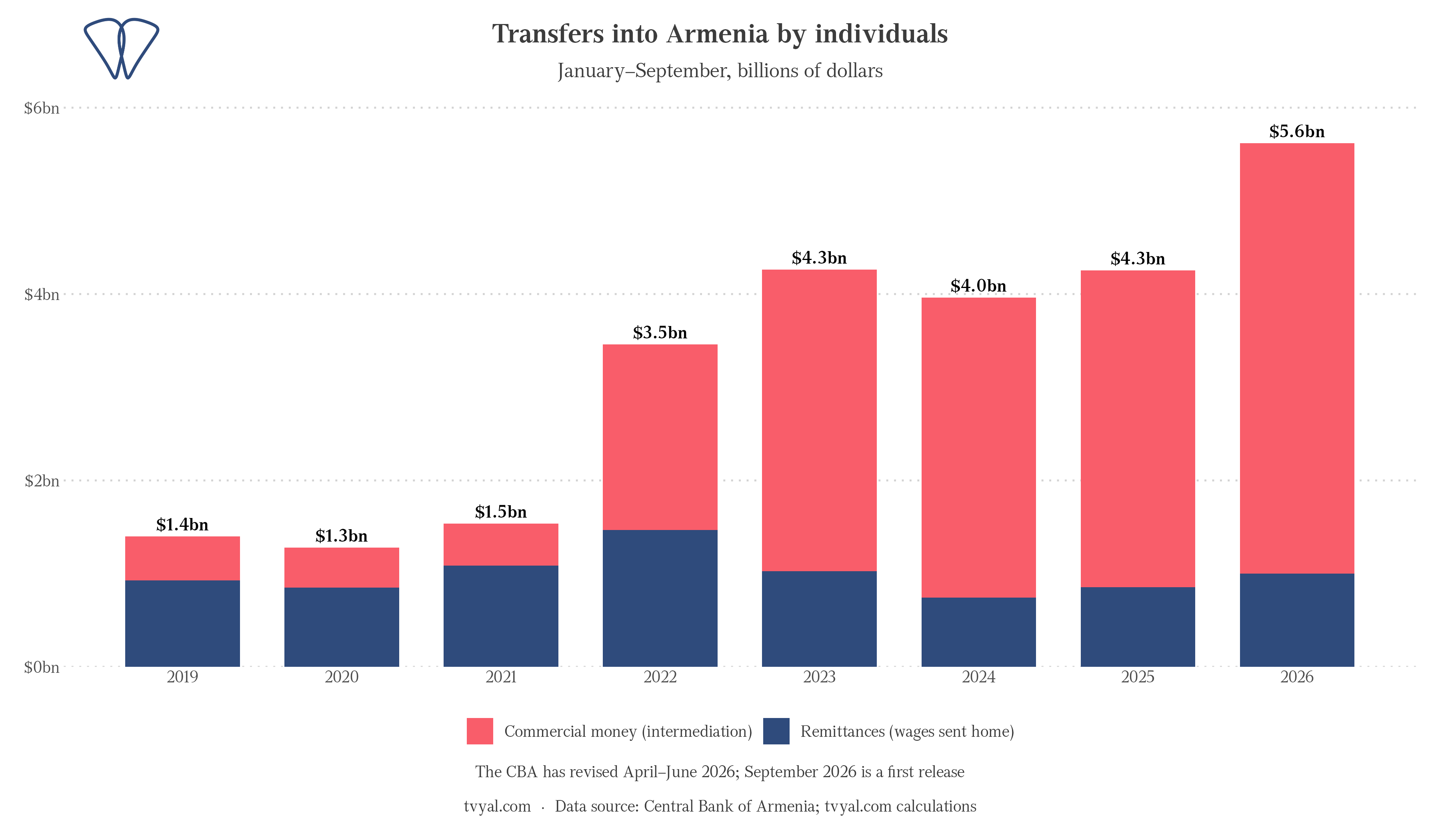
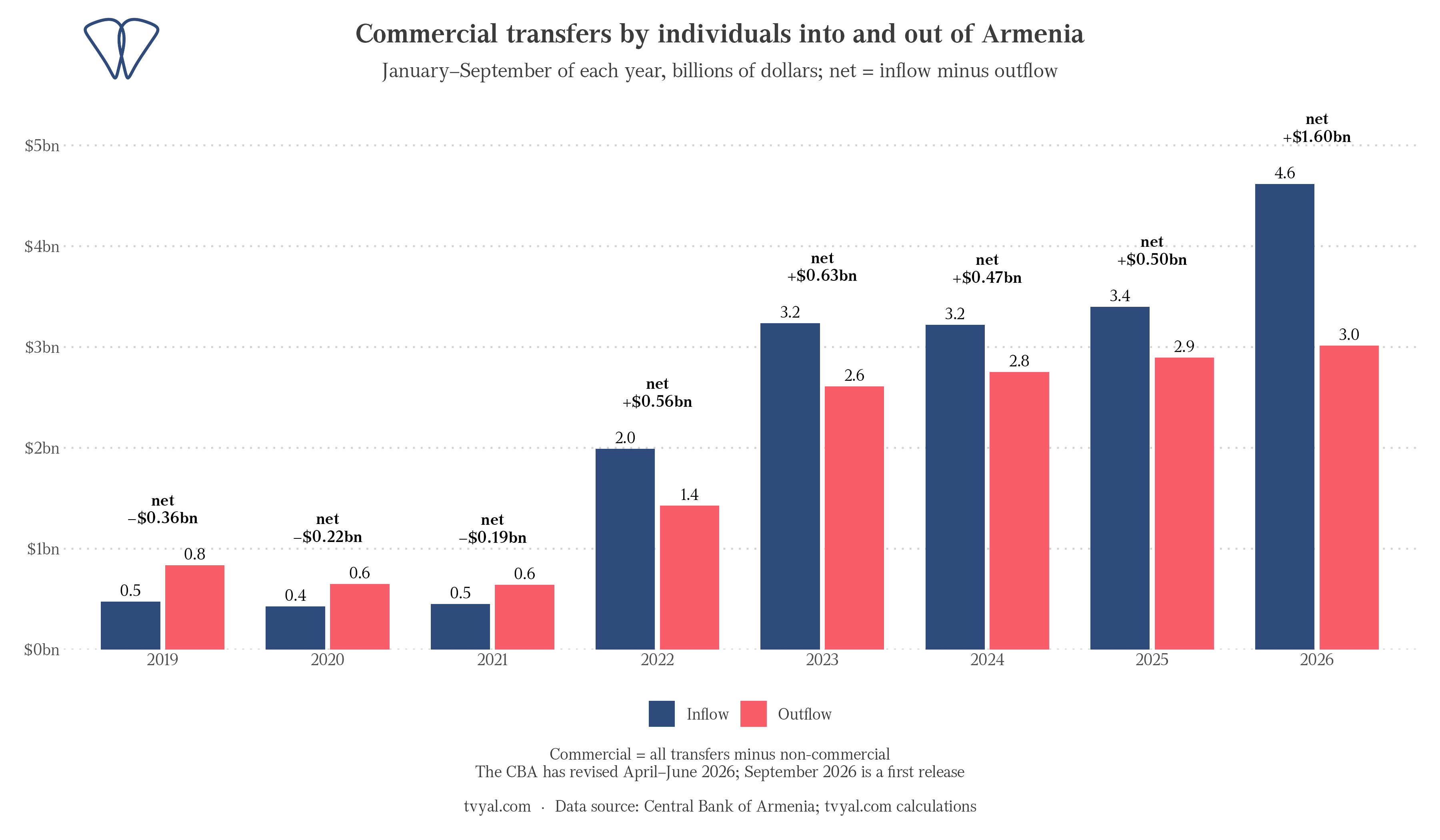
The Central Bank publishes monthly statistics on inflows and outflows of transfers made by individuals through the banking system, by country. In the first nine months of 2026, a total of $5.6 billion flowed into Armenia through the banking system as cross-border transfers from individuals. Of this volume, only $1.0 billion is classified as a classic transfer (cash sent by labor migrants). The remaining $4.6 billion was commercial, including payments for goods and services, as well as capital movements through personal accounts. This commercial component has increased almost tenfold compared to the same period in 2019 ($0.5 billion). 73% of this commercial inflow comes from the Russian Federation. It is expected that by the end of the year, commercial transfers from individuals will reach $6.5 billion, accounting for about 20% of Armenia’s GDP. Moreover, the cited indicator reflects exclusively commercial transfers made by individuals through the RA banking system.
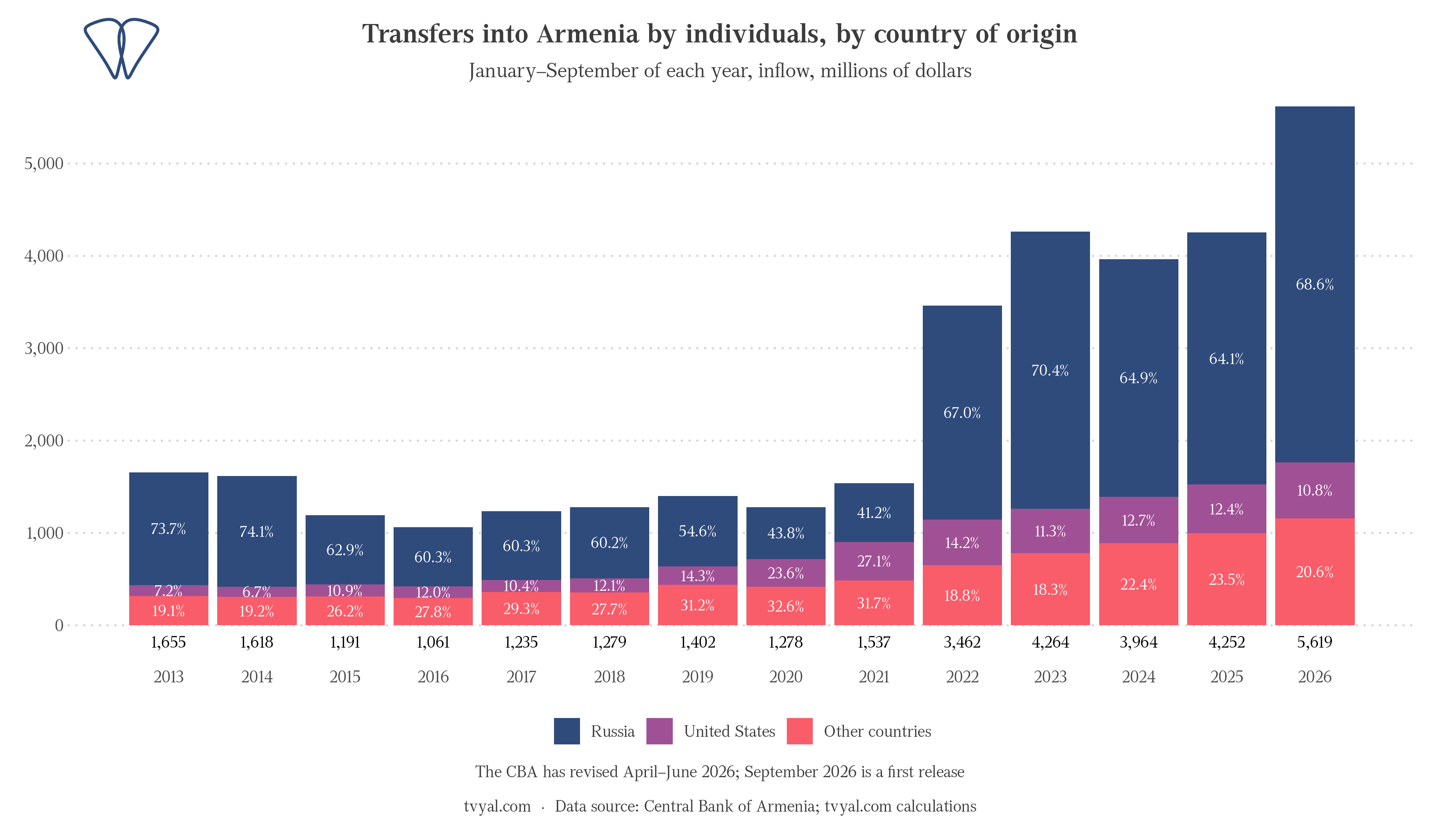
Inflows over the past twelve months have reached a record $7.35 billion. The previous peak was $6.4 billion in May 2023. It then fell by 17% over the next thirteen months to $5.3 billion in June 2024. The current level is 15% above the previous peak.
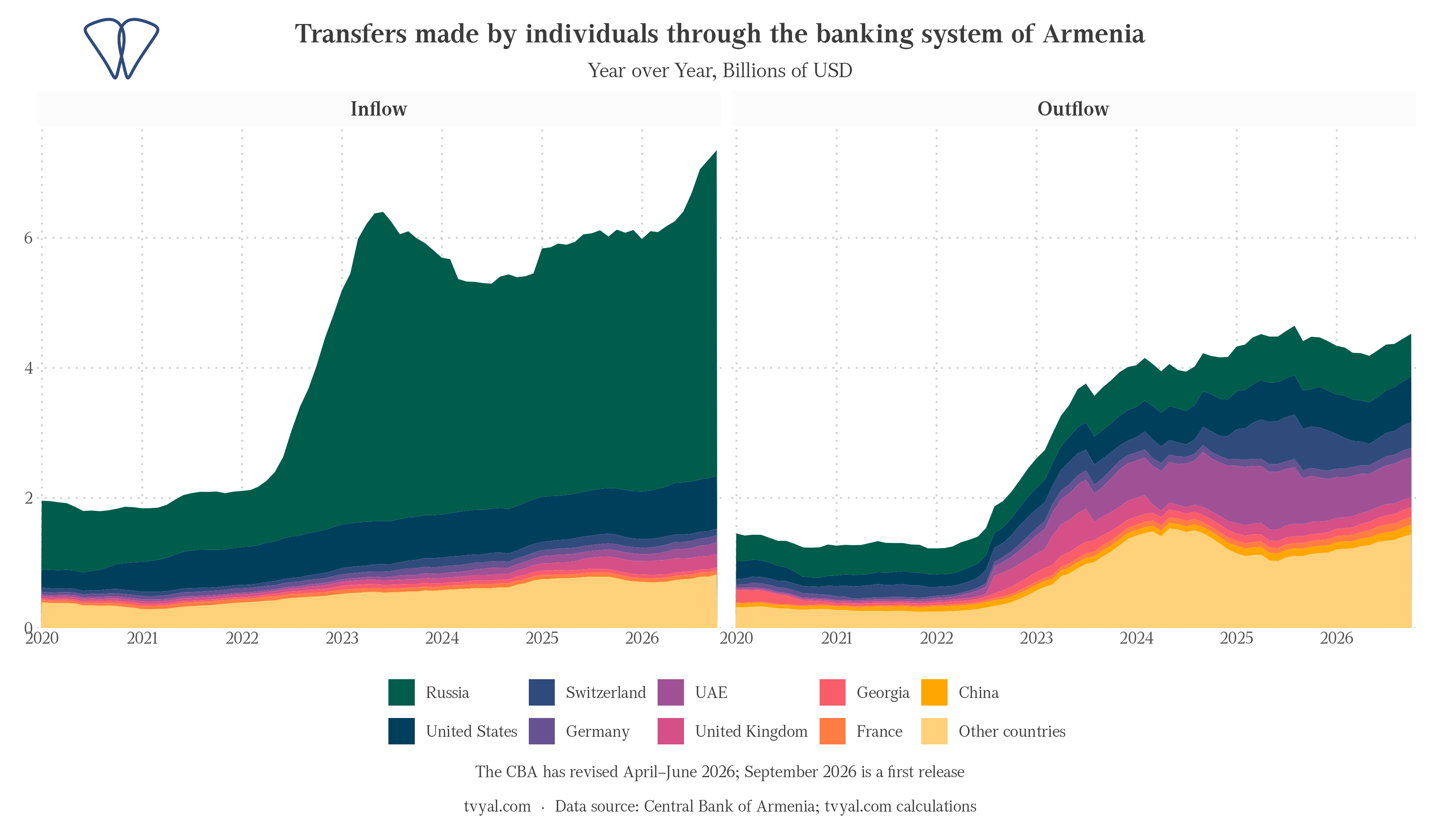
The observed surge is commercial, and keeping commercial flows going depends on confidence in the financial system and on having a working corridor.
Compared to the same period in 2025, inflows increased by 62% in June and 70% in July, reaching a historical high of $0.91 billion. This figure was followed by inflows of $0.60 billion in August (up 32% year-on-year) and $0.65 billion in September (up 28%). From Russia alone, $0.69 billion was transferred in July, $0.41 billion in August, and $0.43 billion in September.
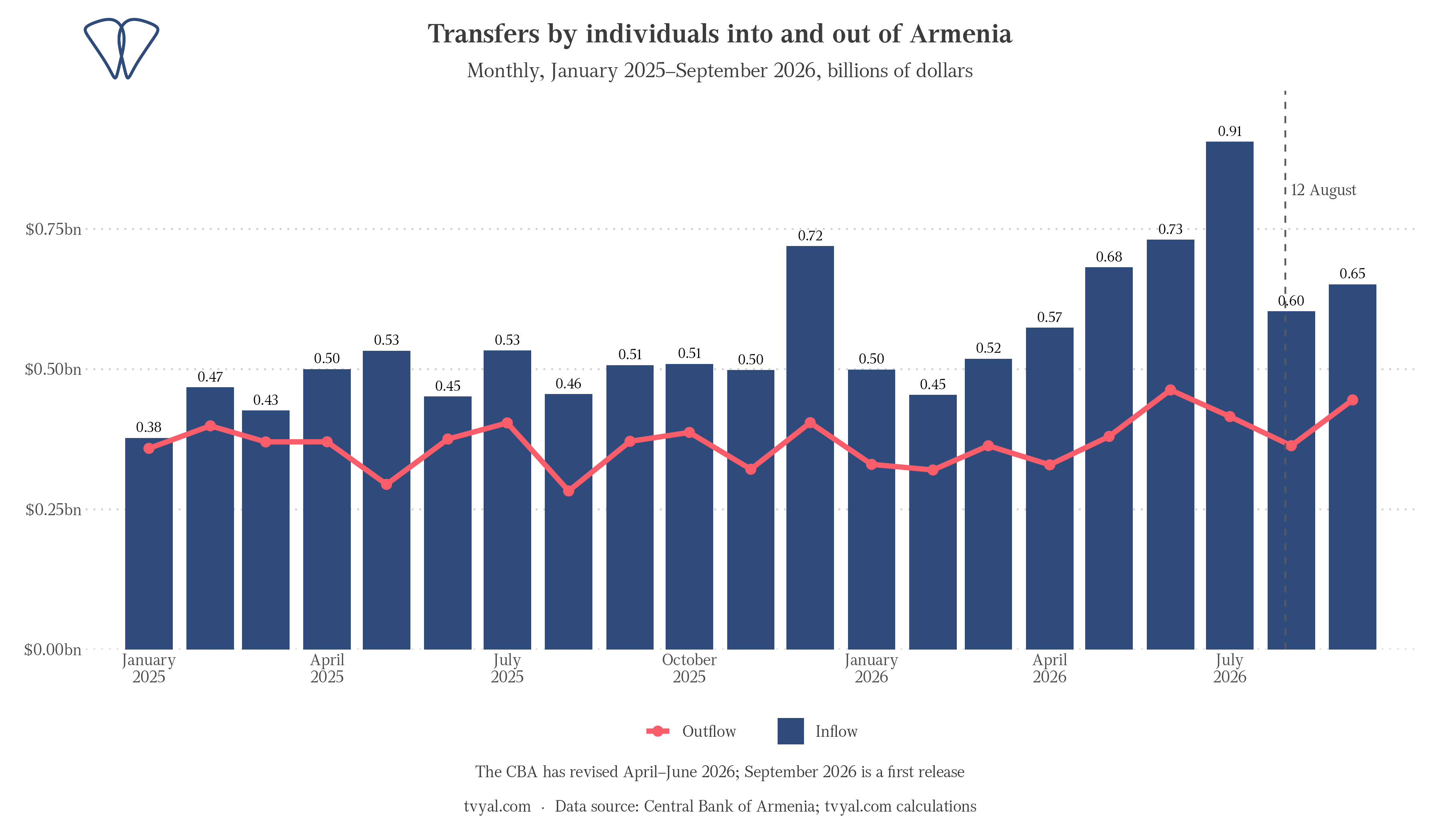
The vertical line in the chart shows August 12. Starting from August 12, the Central Bank of Armenia has obliged commercial banks to check the parties to the transaction, the geography of payment and the origin of the goods to identify the risks of circumventing international sanctions. If such risks appear, a payment can be held before it goes through. No specific country is indicated in the mentioned regulations [5]. It is difficult to unequivocally assert that the two-month decline is solely a consequence of these regulations. It should be taken into account that August is distinguished by seasonal inactivity, and September indicators are still preliminary.
It is also worth watching how financial outflows move. The bulk of commercial transfers do not remain in Armenia. About 85% of the commercial inflow observed in January-September 2023-2025 again flowed out, going to the USA, UAE, Switzerland and other countries, which indicates their transit nature. However, in 2026, the volume of transit flows decreased: only 65% of the inflow flowed out, and in January-September, $1.60 billion remained in Armenia, compared to the average of $0.5 billion recorded in the previous three years.
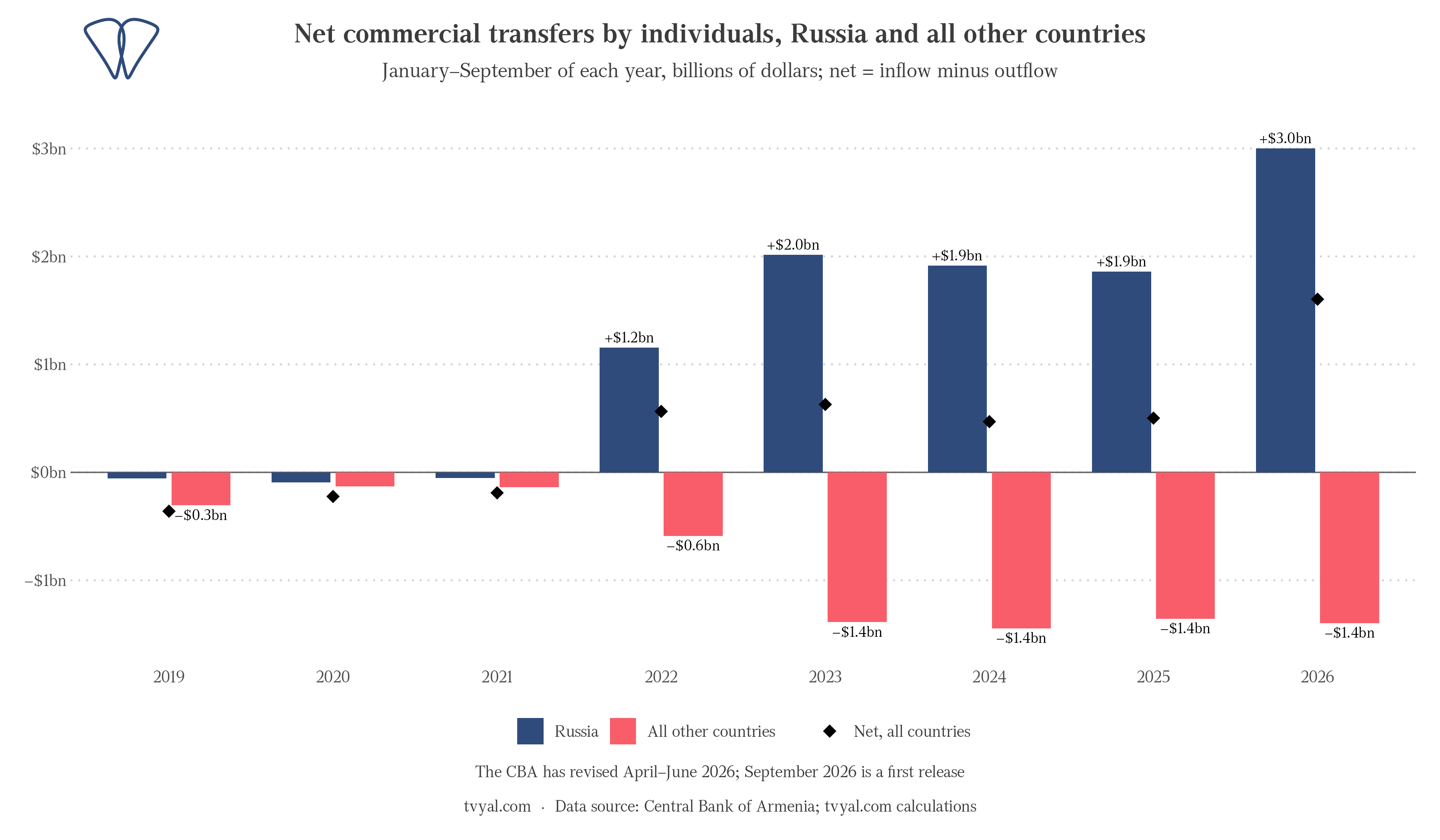
The above picture is largely due to flows from Russia. Subtracting the outflow in the opposite direction, the net inflow from Russia in the current year amounted to $3.0 billion. At the same time, as every year since 2023, all other countries together produced a net outflow of about $1.4 billion. In fact, the additional funds received from Russia in the form of transfers of individuals did not flow out of the country; they remained in Armenia.
One correction: As a result of the Central Bank’s revision of the April-June figures, the total volume for the January-July period currently stands at $4.36 billion, down from $4.47 billion published on October 30*.
There is every reason to expect that the capital inflow has begun to fall. The current indicators have already passed the peak. This assessment is based not only on statistical data, but also on the fact that in the run-up to the Russian parliamentary elections on September 20, a wave-like inflow of people and capital was observed, conditioned by post-election expectations. After the end of the electoral processes, the main drivers of migration and capital flows were neutralized. As we have already mentioned, the pace of economic growth is already slowing down, which is also confirmed by the positions voiced by the Chairman of the Central Bank during press conferences.
Where did the funding go?
It would be logical to expect that such a volume of external financial inflow would be directed to the creation of production capacities and would form a stable base for long-term foreign direct investment (FDI). In the previous analysis, we wrote that this capital does not become productive FDI. Direct investments remain below the $1 billion threshold in all years, while commercial transfers have reached $4.6 billion. Instead, capital circulates through an institutional chain. The chain leading from bank accounts to macroeconomic growth consists of four institutional stages. First, there is an inflow of financial resources, which expands the financial sector. Then the main part of the resources generated is invested in the construction sector. This is followed by the activation of the real estate market, and then the expansion of the domestic services sector. This is not a sustainable growth of the real economy, but is financial speculation.
The second quarter indicators clearly reflect the activity of this chain. 3.3 percentage points (i.e. half) of the 6.7% growth in the second quarter is the result of this chain, which is fueled by financial flows from abroad (mainly from Russia). The financial sector alone provided 2.2 percentage points of growth, and construction - 1.1 points. Agriculture, which is significantly dependent on the Russian market, was the only major sector to record a decline (by 15.3%), reducing overall economic growth by one percentage point. It is necessary to take into account the structure of growth in construction and the financial system. In Armenia, construction is the primary investment channel: capital is invested, directed to the service sector, new institutions are opened, which is fully recorded as economic growth. Although this is actual growth, it is largely formed at the expense of transit foreign capital, the inflow of which can just as easily turn into an outflow.
Bank lending is also directed to these sectors. In 2025, consumer lending volumes increased by 27.5% [6], with the highest growth observed in the construction lending sector. The latter grew by 30.2%, and the Central Bank Chairman himself warned that this trend could lead to an increase in the risks of excess supply and loan losses [6]. The same picture is also reflected in construction volumes, which grew by 24.9% in the first nine months of 2026 [2]. In fact, the inflow of financial resources is accumulating in the finance, construction and real estate sectors, bypassing the exportable goods sector.
Stabilization pad
An economy that is highly dependent on external financial flows must form an appropriate safety cushion to mitigate the risks of a possible cessation of flows. In plain economic terms, it works like a household budget: when utility costs are covered by external financing (for example, transfers), there is no need to use internal regulation tools. When the volume of external financing decreases and the burden of expenses is completely shifted to internal resources, there is a need to spend one’s own savings and reduce expenses. This mechanism works, but its impact is directly felt by all participants in the economy. The $2.5 billion gap in the current account already indicates structural vulnerability in the event of a cessation of external flows.
The Central Bank’s toolkit for absorbing potential outflows depends significantly on the volume of net domestic assets, which act as a sterilization buffer. If in January 2025 this buffer amounted to 649 billion drams, then by the spring of 2026 about two-thirds of it had already been exhausted, decreasing to about 220 billion drams [7]. If the pace of 2026 is maintained for several more quarters, the regulatory buffer will be exhausted, as a result of which further inflows will directly increase the money base. The movement of these indicators can be followed at tvyal.com/rate/stress.
In September, the Central Bank raised the refinancing rate for the first time since 2022, bringing it to 6.75%, and in November another increase was applied [8]. In the previous period, starting in 2022, the dram appreciation effectively implemented the interest rate restraint function, but the CB Board has documented the exhaustion of the potential of this mechanism. The increase in the interest rate indicates that the CB Board does not expect an automatic restraint in demand.
The precedent: the experience of 2008 and 2009
The economy of the Republic of Armenia has already gone through a similar phase. In the period preceding the crisis of 2008-2009, the economy was based on a disproportionate growth of imports and non-exportable sectors (in particular, construction) financed by remittances [9]. As a result of the halt in these processes, a decline of about 14% in GDP was recorded in 2009, with a decline of more than 40% in the construction sector alone [10]. At the beginning of the same period, remittances from abroad had decreased by about a third [11]. The crisis mechanism was based on a sharp increase in remittances, the reversal of which in several quarters led to a systemic decline in the construction sector. Currently, construction is also the main absorber of capital. However, the volumes of financial inflows are incomparably larger. During that period, the Armenian economy, expanded by external flows, was unable to make a safe landing. Under current conditions, a repeat of the 14% economic downturn, an apocalyptic scenario, is unlikely, but we treat a sharp decline in financial flows fueling the construction sector as the primary macroeconomic risk. The Central Bank is currently prepared for crisis scenarios, and the likelihood of a smooth landing is high.
The EAEU is one of the operating pipelines
There is no doubt that the sharp increase in financial inflows is a direct consequence of international sanctions. The financial restrictions imposed on Russia pushed capital to look for routes into countries with working infrastructure, including Armenia. Without sanctions, these flows would have been insignificant, which we substantiated in the analysis of Russian capital outflows and the subsequent publication of October 30. The first article of the EAEU Treaty establishes four fundamental freedoms: goods, services, capital, and labor [12]. As noted in the analysis of October 30 and the article “A Harvest With Nowhere to Go”, the movement of capital from these four freedoms is practically not implemented. The other three components continue to form the current corridor. After the amendments made in December 2019, Russian currency legislation allows Russian residents to receive financial resources from non-residents without restrictions to bank accounts opened in EAEU member states [13]. A similar regulation also applies to non-member countries, if the latter exchange tax information with Russia. Therefore, membership in the EAEU is not the only prerequisite for ensuring a financial corridor. However, the status quo enshrined in the agreement has been a key factor stimulating economic growth. Since there is a possibility of turbulent periods that could lead to a systemic economic crisis, Armenia must continue to ensure a balance between the EAEU and the European Union. Global financial markets are currently unstable. After the recent US elections in 2026, financial markets experienced a significant decline, which has not yet recovered. A decline was also observed in Asian and other markets. In this regard, the additional geopolitical shocks currently created will not contribute to a smooth economic recovery.
In this context, it is necessary to emphasize that any abrupt change in the foreign policy vector carries serious macroeconomic risks. A sharp deviation in the direction of Brussels or Moscow will disrupt the balance on which the financial corridor operates. The Republic of Armenia has always aimed to implement a balanced policy, maintaining partnership relations with both the EAEU states and the European Union. For the Republic of Armenia, maintaining its own impartial position within the framework of the “both-and” concept is a priority. It is this approach that allows Armenia, in the conditions of a stable international financial system, to act as an intermediary between Russia, an EAEU member, and the outside world. A unilateral deviation in the direction of the EU or Moscow will disrupt the established strategic balance.
Another key component of systemic balance is trust. Correspondent banks maintain the activity of these accounts only as long as they trust the internal control (compliance) processes. The node stays viable only on mutual trust, and that trust must be assessed.
At the same time, I partially share the position that banks provide limited lending, and the volume of investments in the economy is insufficient. Does Armenia need such a model? That is a separate and important topic. However, there are different claims that it is not necessary and the loss will be painless.
Previous publications related to the topic: “Not gas, but the banking system”, “Two economies and one average”, “The Growth Wave Stalled” and “The end of the era of cheap money”.
* Data explanation: The source of remittances by country is the Central Bank of Armenia (Statistical bulletin “Remittances of individuals by country”, monthly, in thousand USD). Commercial transfers were calculated for each January-September period, subtracting the non-commercial part (classic transfers) from the total volume. The data for April-June 2026 were marked as revised by the Central Bank of Armenia, as a result of which the total volume for the January-July period decreased from $4.47 billion to $4.36 billion. The indicators for September 2026 are preliminary and may change. The twelve-month indicators are rolling amounts. The share flowing back from Armenia was calculated as the ratio of outflows to inflows in the same January-September period. The year-end forecast for commercial inflows is obtained by dividing the January-September period figure by the share of those months in the total annual volume for 2023-2025 (67-74%), which amounts to $6.2-6.9 billion.
References
[1] Armenia’s economic activity slowed in Q3 2026, says the CBA monetary policy transparency report // Golos Armenii, 3 November 2026 — golosarmenii.am
[2] Armenia’s economic activity grows 6.9% in January-September // Armenpress, 26 October 2026 — armenpress.am; first half: armenpress.am
[3] World Economic Outlook, October 2026, executive summary // International Monetary Fund — imf.org
[4] World Bank improves Armenia’s economic growth forecasts for 2026 and 2027 // ARKA — arka.am
[5] New requirements for banks to manage risks of circumventing international sanctions come into effect // ArmBanks.am (ARKA), 17 August 2026 — armbanks.am
[6] Armenia’s financial system records growth across all sectors // Armenpress, 25 May 2026 — armenpress.am; Central Bank of Armenia is concerned about the outpacing growth of lending // ArmBanks.am (ARKA), 26 May 2026 — armbanks.am
[7] From Moscow to Hormuz: The Self-Concealing Windfall of Financial Sanctions // A. Tavadyan, SSRN 7305178, August 2026 — ssrn.com
[8] The CBA governor explains the decision to raise the refinancing rate for the second month in a row // Armenpress (in Armenian), November 2026 — armenpress.am
[9] Armenia: Addressing Social Vulnerabilities and Strengthening Competitiveness // World Bank — worldbank.org
[10] Government of Armenia, news item on the 2009 economic downturn — gov.am. The National Statistical Service figure reported at the time was −14.4% (ARKA, 2 February 2010)
[11] World Food Programme, Armenia food security brief, 2009 — wfp.org
[12] Treaty on the Eurasian Economic Union, 29 May 2014 // ILO NATLEX — natlex.ilo.org
[13] Currency regulation: new amendments (Federal Law No. 398-FZ) // ALRUD, 3 December 2019 — alrud.com